
How To
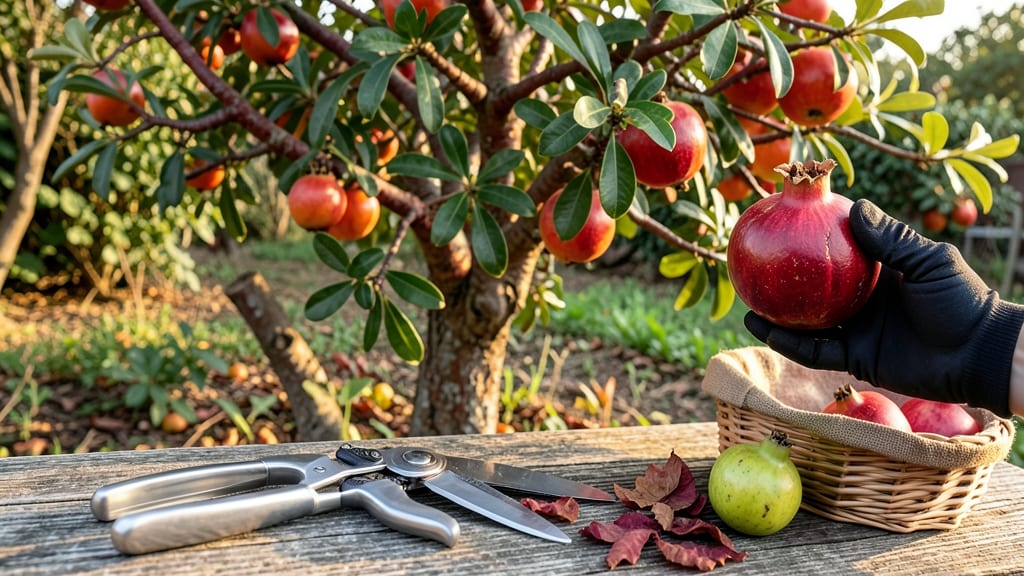
Picking pomegranates from the tree at the right time means the difference between sweet, juicy fruit and bitter disappointment.
Picture this: you’ve waited months for your 🍇 pomegranate tree to bloom, and now the fruit is hanging heavy on the branches. But how do you know when to pluck them? Grab one too early, and it’ll be sour and seedy.
Wait too long, and the skin splits open, leaving you with mushy pulp. The key is learning the exact signs of ripeness—without damaging the delicate fruit in the process.
In this guide, you’ll discover how to test for ripeness by checking the rind color, weight, and even the calyx (that’s the dried flower part at the top).
I’ll also cover how climate affects timing—because a cool fall in Zone 6a can delay harvest by weeks—and the best way to handle overripe or underripe fruit once you’ve picked it.
By the end, you’ll confidently harvest your pomegranates at peak flavor, store them properly, and avoid the common mistakes that turn a great crop into a waste. Let’s get started!

How to identify perfectly ripe pomegranates on the tree
Pomegranates are finicky fruit—pick them too early, and they’ll be sour and seedy; too late, and they’ll split open or rot on the tree. The key is learning to read your tree’s visual and tactile cues so you harvest at peak sweetness.
Unlike many fruits, pomegranates don’t soften as they ripen, so you’ll need to rely on color, weight, and texture instead.
Start by checking the skin color, which is your first major clue. Immature pomegranates are green or pale yellow-green, while perfectly ripe ones develop a deep, glossy red or pink hue.
Some varieties like 'Wonderful' turn nearly burgundy-red, while others like 'Eversweet' stay lighter pink. Pro tip: Look for uniform color—if one side is still green, the fruit needs more time.
Next, perform the weight test, which is surprisingly accurate. A ripe pomegranate feels heavy for its size because the arils (seeds) inside are fully developed. Gently cup one in your palm—if it feels light like a balloon, it’s not ready.
Meanwhile, overripe fruit may feel mushy or hollow when shaken, signaling it’s past its prime.
The calyx test is another foolproof method. The calyx is the flower part at the top of the fruit, and it dries out as the pomegranate matures. When ripe, it should be brown, papery, and slightly cracked.
If it’s still green and firm, the fruit isn’t ready. This is especially useful for late-season varieties that ripen unevenly.
For a non-destructive test, try the tap test. Gently tap the fruit with your knuckles—if it sounds dull and solid, it’s ripe. A hollow or echoing sound means it’s overripe or hollow inside.
This method works best on mature trees with firm branches, as young or flexible branches can give false readings.
Seasonal timing varies by USDA hardiness zone. In Zones 7-9, pomegranates typically ripen between late September and November, while in Zones 10-11, they may be ready as early as August or September.
Early varieties like 'Early Wonder' ripen first, followed by maincrop varieties like 'Mollar de Elche'. Always harvest before the first hard frost, which can damage the fruit.
Climate plays a big role too. In hot, dry regions, pomegranates ripen faster due to intense sunlight and heat. Conversely, in cooler or cloudy climates, they may take longer to reach full maturity.
If your tree is in a container or urban setting, it might ripen 1-2 weeks later than field-grown trees due to limited root space and heat stress.
Here’s a quick ripeness checklist to summarize the key signs before you harvest:
| Sign | What to Look For | Action |
|---|---|---|
| Skin Color | Deep red, pink, or burgundy | ✅ Ready to pick |
| Weight | Feels heavy for size | ✅ Ready to pick |
| Calyx | Dry, brown, and splitting | ✅ Ready to pick |
| Tap Test | Dull, solid sound | ✅ Ready to pick |
| Skin Color (Unripe) | Green or pale yellow-green | ❌ Wait 1-2 weeks |
| Weight (Unripe) | Light for size | ❌ Wait 1-2 weeks |
Once you’ve confirmed ripeness, harvest on a dry, sunny morning to avoid bruising the fruit. Use pruning shears or a sharp knife to cut the stem, leaving a 1-inch stub to prevent disease. Avoid twisting the fruit off, as
Best practices for harvesting pomegranates without ruining them
Once you’ve spotted the perfectly ripe pomegranates on your tree, the next challenge is harvesting them without damaging the delicate skin or seeds inside. The wrong technique can lead to bruised fruit, split rinds, or even falling branches—especially with heavy varieties like 'Wonderful' or 'Eversweet'.
I’ve learned the hard way that rushing this step can turn a bountiful harvest into a messy cleanup.
Start by using a sharp pruning saw or clean garden shears to cut the stem about 1-2 inches from the fruit. Avoid twisting or pulling, which can cause the skin to crack.
For smaller trees or dwarf varieties, you might even harvest by hand—but only if the fruit is fully ripe and ready to detach with minimal force. Always wear gloves to protect your hands from the sticky sap and sharp seeds.
If you’re harvesting multiple pomegranates, work systematically from the bottom branches upward to avoid overloading lower limbs. This prevents branches from snapping under the weight of too many fruits at once.
Once picked, place them in a shallow cardboard box or mesh bag to allow airflow—never stack them in a closed container, as this traps moisture and speeds up spoilage.
⚠️ WARNING: Harvesting Too Late or Too Early
Picking pomegranates before they’re fully ripe (when the rind is still green or pale pink) results in bitter, astringent fruit that’s nearly inedible. On the flip side, waiting until the rind splits open naturally or the seeds turn brown means the fruit is overripe and prone to mold. In Zone 6a, a late frost can also force an early harvest—always monitor your local frost dates (like October 20) and adjust timing accordingly.
For underripe pomegranates, you can try letting them ripen off the tree by placing them in a cool, dark place (like a garage) for 1-2 weeks. However, this method rarely improves flavor—it’s better to wait for full ripeness on the tree.
If you’ve already picked some too early, store them in the fridge for up to 2 months to slow ripening, but expect compromised taste.
When dealing with overripe pomegranates, act fast. These fruits are best used immediately for juicing or cooking (if you’re into that—though we’re sticking to gardening here!).
To salvage slightly overripe fruit, cut it open, remove the mushy arils, and freeze the good seeds for later use in salads or smoothies. Never wash pomegranates until you’re ready to eat them, as excess moisture speeds up spoilage.
Finally, label your harvest with the pick date and store in a well-ventilated area at 50-60°F. A paper bag with a few apple slices (to release ethylene gas) can help extend shelf life by 2-3 weeks.
With these techniques, you’ll maximize your yield while keeping every pomegranate intact and delicious.