
Picking
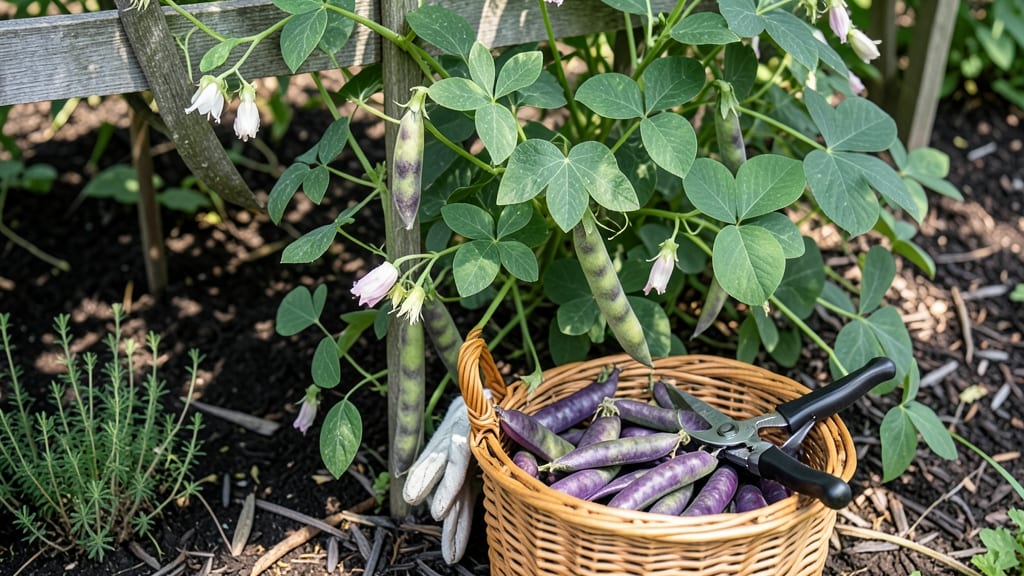
Picking purple hull peas at the right moment means the difference between sweet, tender pods and tough, mealy ones that fall apart when you shell them.
Picture this: you’ve waited all season for those deep purple pods to mature, only to open one and find the peas already too big or the pod stringy. That’s why timing is everything—miss it, and you’re left with a crop that’s past its prime.
The secret? A little shake test and a close look at the pod’s color and firmness.
Peas are ready when pods are 2-3 inches long, deep purple, and make a faint rattling sound when shaken. This is your cue to harvest before the seeds inside grow too large, which happens fast in July and August heat.
Check your plants every 2-3 days once pods start turning purple, and you’ll catch them at peak flavor.
In this guide, I’ll walk you through the exact tests to use, the best time of day to pick, and how to tell when it’s time to stop harvesting so the remaining pods can finish maturing. No more guesswork—just perfect peas every time.

How to test purple hull peas for perfect ripeness using the seed rattle method
Harvesting purple hull peas at the perfect moment ensures sweet, tender pods packed with flavor. The seed rattle test is my go-to method for determining ripeness—it’s foolproof and takes just seconds.
Instead of guessing by size or color, you’ll rely on the distinct sound of mature seeds inside the pod, which signals peak harvest time.
This technique works best when pods are between 2-3 inches long and have started turning their signature deep purple hue. If you wait too long, the pods become tough and the seeds inside grow too large, making them less enjoyable to eat.
Let’s break down exactly how to perform this test for foolproof results every time.
- 1 Select pods that are 2-3 inches long and show purple streaks. Avoid pods that are still fully green or have turned completely brown.
- 2 Hold the pod firmly in one hand and give it a gentle shake near your ear. Listen closely for a soft rattling sound—this indicates mature seeds inside.
- 3 If you hear a clear, distinct rattle, the pod is ready to harvest. If the sound is muffled or absent, wait 1-2 days and test again.
- 4 Harvest immediately by snapping the pod off the vine at the stem. Avoid pulling, as this can damage the plant. Repeat the test on 3-5 pods per plant to ensure consistency.
- 5 Avoid overripe pods—they’ll sound hollow when shaken and feel dry or papery. These pods are past their prime and should be discarded or used for seed-saving instead.
One common mistake is confusing a mature seed rattle with an overripe pod. Overripe pods will sound hollow and feel brittle, while perfectly ripe pods have a slight give when pressed gently between your fingers.
If you’re unsure, cut open a pod to check the seed size—ideal seeds should be plump but not overly large.
Timing is everything with purple hull peas. Start testing pods around 60-70 days after planting, depending on your climate and growing conditions. In warmer regions, pods may mature faster, while cooler areas might need an extra week or two.
Always test pods in the morning when they’re cool and firm for the most accurate results.
Pro tip: Keep a harvest journal to track when pods start rattling in your garden. Note the day of the year and weather conditions—this helps you predict future harvests and plan your garden layout for maximum efficiency.
Over time, you’ll develop an instinct for when to start testing pods without even needing to shake them!
For container gardeners, the seed rattle method works just as well. Just ensure your purple hull peas have enough space to grow—5-gallon containers or larger are ideal.
If you’re growing in limited space, focus on testing pods from the outermost vines first, as they often mature slightly earlier than those in the center.
Remember, the goal is to harvest pods when they’re at their peak tenderness. If you miss the window, don’t worry—purple hull peas are still delicious when cooked, even if slightly less sweet. But for that fresh-from-the-vine flavor, the seed rattle test is your best friend in the garden.
🌱
Pod plumpness and color: visual cues for harvesting purple hull peas
Harvesting purple hull peas at the perfect moment relies heavily on visual cues—especially pod size, color shifts, and firmness. Unlike green peas, these pods start green and gradually deepen to a rich purple hue as they mature.
Ignoring these visual signals can lead to pods that are either too tough or have overly large peas inside.
The color transformation from green to deep purple is your first clue. Green pods mean the peas are still developing, while deep purple pods indicate they’re ready to pick. However, timing is critical—wait too long, and the pods become fibrous and the peas inside grow too big for shelling.
Pod size is another key indicator. Aim for pods that are 2-3 inches long—any shorter, and they’re underripe; any longer, and the peas inside will be too mature.
Use a ruler or your thumb as a quick reference: if the pod fits snugly between your thumb and forefinger, it’s likely ready.
| Pod Stage | Size | Color | Firmness | Harvest Ready? |
|---|---|---|---|---|
| Early Maturity | Under 1.5 inches | Green | Very firm | No |
| Ideal Ripeness | 2-3 inches | Deep purple | Firm but yields slightly | Yes |
| Overripe | 3+ inches | Dull purple | Mealy, tough | No |
🌱 Pro Tip: Check pods every 2-3 days during peak season (July-August) to avoid missing the window.
Environmental factors like temperature and sunlight also influence ripening speed. In hotter climates, pods may mature faster, so monitor them closely. Conversely, cooler temperatures can slow ripening, extending the harvest window. Always prioritize morning harvests to avoid wilting in the heat.
Firmness is the final test—gently press a pod between your fingers. If it yields slightly but doesn’t feel mushy, it’s ready. Overripe pods will feel tough and hollow inside. Once you’ve mastered these visual cues, you’ll never miss the perfect harvest again.
Remember, the goal is to pick pods when they’re plump, purple, and tender. This ensures the sweetest peas with the best texture, making all your efforts in the garden worthwhile. Happy harvesting! 🌿