
Picking
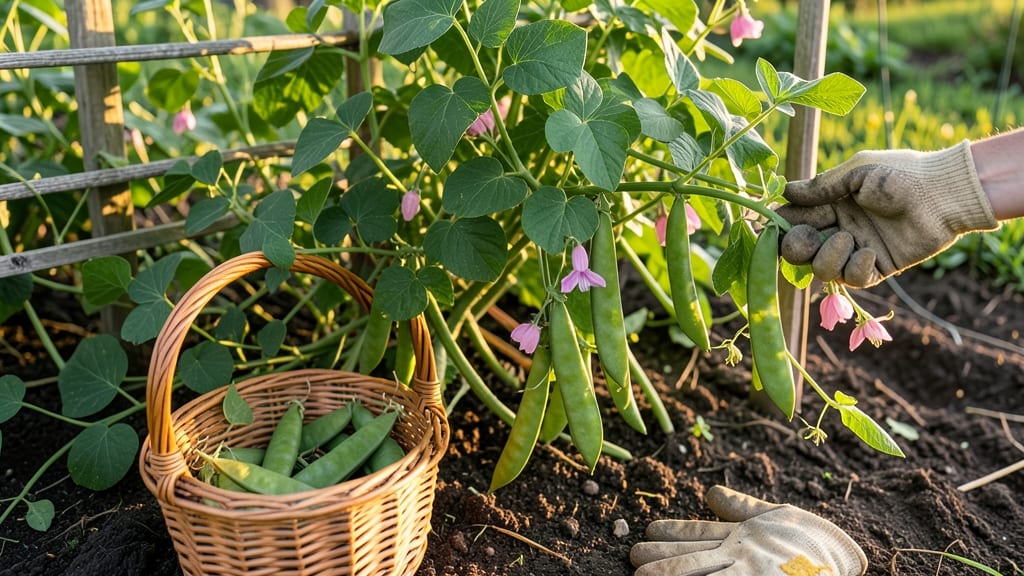
Picking sugar snap peas at the right time turns your garden into a sweet, crunchy treasure chest—but wait too long, and you’ll end up with tough, mealy pods that taste like disappointment.
You’ve spent weeks nurturing your 🌱 sugar snap peas, watching them climb their trellis and swell with promise. Now the question is: how do you know when those pods are ready to pick? The answer lies in two simple clues—pod size and seed maturity—that signal peak flavor and texture.
Most gardeners miss the window because they focus on length alone, but the real secret is in the flatness of the pod and the tiny seeds inside. A pod that’s 2-3 inches long, bright green, and snaps crisply when bent is your cue to harvest.
Ignore these signs, and you’ll watch your peas turn fibrous and lose their signature sweetness.
Below, I’ll walk you through the exact visual cues to watch for, how often to pick for continuous harvests, and a few pro tips to keep your plants producing until frost. Ready to turn your garden into a pea-picking powerhouse?

How to identify perfect sugar snap pea pod size for harvest
Sugar snap peas reach their sweetest, crispest stage at a very specific moment—when their pods are 2-3 inches long and still flat, like a tiny green paddle. This is your golden window, where the pods snap with a satisfying crunch and taste like nature’s candy.
Miss this moment, and you’ll end up with tough, stringy pods that taste more like overcooked green beans than the sweet delicacy you planted.
I’ve learned the hard way that waiting for pods to get "bigger" doesn’t mean better—it means bitter. The sugar content peaks early, then converts to starch as the seeds mature. Once those pods start bulging with seeds, the flavor fades faster than a wilting marigold in the afternoon sun.
Here’s the secret: harvest frequency is just as important as timing. Picking regularly tricks the plant into producing more pods, giving you a continuous harvest instead of one big disappointment. Think of it like pruning—you’re encouraging growth by removing the old to make room for the new.
Now, let’s break down exactly what to look for, because not all sugar snap varieties play by the same rules. Dwarf varieties like 'Sugar Sprint' mature faster with smaller pods, while vining types like 'Sugar Ann' give you a few extra days to decide.
The comparison table below will show you the key differences at a glance.
The color of your pods is another clue. Bright, vibrant green means freshness, while yellowing or dulling signals overmaturity. I once let a batch of 'Sugar Daddy' peas yellow, and they tasted more like cardboard than candy. Don’t make my mistake—harvest when they’re still that lively green.
Don’t forget to squeeze-test your pods. A ripe sugar snap should feel firm and crisp—almost like a tiny green drumstick. If it feels mushy or squishy, it’s past its prime.
And if you can see seeds bulging inside, you’ve waited too long. The seeds should be visible but not taking up half the pod’s space.
One of the biggest mistakes I see gardeners make is assuming that bigger pods equal better flavor. That’s not how sugar snap peas work—they’re all about timing, not size.
A pod that’s 3 inches long but tough and stringy is a missed opportunity. Stick to the 2-3 inch rule, and you’ll always have the sweetest, crispiest harvest.
For container gardeners, timing can be trickier because space is limited. Dwarf varieties like 'Sugar Annette' are perfect for pots, but you’ll need to harvest even more frequently—sometimes every 2 days—to keep the plant producing.
The key is to stay on top of it, especially in hot weather when pods mature faster.
Finally, pay attention to the plant’s overall health. If the leaves start yellowing or the vines weaken, it might be time to let a few pods mature fully for seed saving—or it could signal a pest issue.
Healthy plants with plenty of new flowers mean more pods on the way, so keep an eye on both the pods and the plant itself.
With these tips, you’ll turn your sugar snap pea harvest from hit-or-miss to consistently delicious. And trust me, there’s nothing like the first bite of a perfectly timed sugar snap—it’s like biting into sunshine. Happy harvesting! 🌿
Seed maturity triggers: when sugar snap peas stop being sweet
Behind every perfect sugar snap pea is a fascinating biological process where sugar content and pod texture shift dramatically as seeds mature. When pods first form, they’re packed with natural sugars that create that signature sweetness.
But here’s the catch: once those tiny seeds inside start developing, the plant redirects its energy from sugar production to starch formation and pod thickening. This conversion happens faster than you might think—sometimes in just 24-48 hours—turning your sweet peas into tough, fibrous disappointments.
The key moment arrives when seeds become visible inside the pod but haven’t yet bulged outward. At this stage, the plant’s photosynthesis energy shifts from building sweetness to preparing for seed dispersal.
Think of it like a natural countdown: the longer you wait, the more the sugars convert to starches, and the crisp texture gives way to mealiness.
Even a single extra day can make the difference between a pod that snaps with delight and one that feels like chewing on a rubber band.
🚨
Sugar snap peas lose 50% of their sweetness within 48 hours of seed visibility. Once seeds bulge noticeably, the flavor drops by 70%—there’s no bringing it back. Set a reminder to check your plants every 2 days during peak production!
Three key factors accelerate this maturity process: temperature, sunlight intensity, and water stress. Hotter weather (above 85°F) speeds up sugar conversion, while cooler days (below 60°F) slow it down—giving you more time to harvest.
Direct sunlight also plays a role: plants in full sun mature faster than those in partial shade. And here’s a pro tip: consistent moisture is crucial. Too little water causes pods to toughen prematurely, while overwatering can dilute flavor.
I once grew a batch in container gardens during a heatwave and learned the hard way that mulching helps maintain even soil temperatures.
After harvesting, your plants need a little recovery time to reset their production cycle. Remove spent pods completely (don’t just pinch them off)—this signals the plant to focus on new flowers and pods.
Within 5-7 days, you’ll typically see fresh blooms appearing, especially if you’ve been providing balanced fertilizer (like 5-10-10) every 4-6 weeks. The secret to continuous harvests lies in this cycle: pick regularly, let the plant recover, and watch it reward you with wave after wave of sweet pods.
For late-season planting (8-10 weeks before frost), this cycle becomes even more critical—you’ll want to harvest every 2 days to maximize your yield before cold weather sets in.
One common mistake I see is assuming that once pods start forming, the plant is "done." Not true! Sugar snap peas are prolific producers when given the right conditions. The moment you notice new flowers appearing (usually 3-4 weeks after planting), it’s time to start checking pods daily.
And here’s a trick I’ve used: mark your calendar 60 days after planting as your "harvest alert day"—this is when most varieties hit their first peak production window. From that point on, treat your peas like a daily snack: check, pick, repeat!
Understanding these maturity triggers transforms your harvest from a gamble into a predictable feast. The next time you bite into a sugar snap pea that’s perfectly sweet and crisp, remember: you’re enjoying the result of a carefully timed biological process.
And with these insights, you’ll be the gardener who always gets it just right. Now go enjoy that harvest—your taste buds (and your plants) will thank you! 🌱