
How To
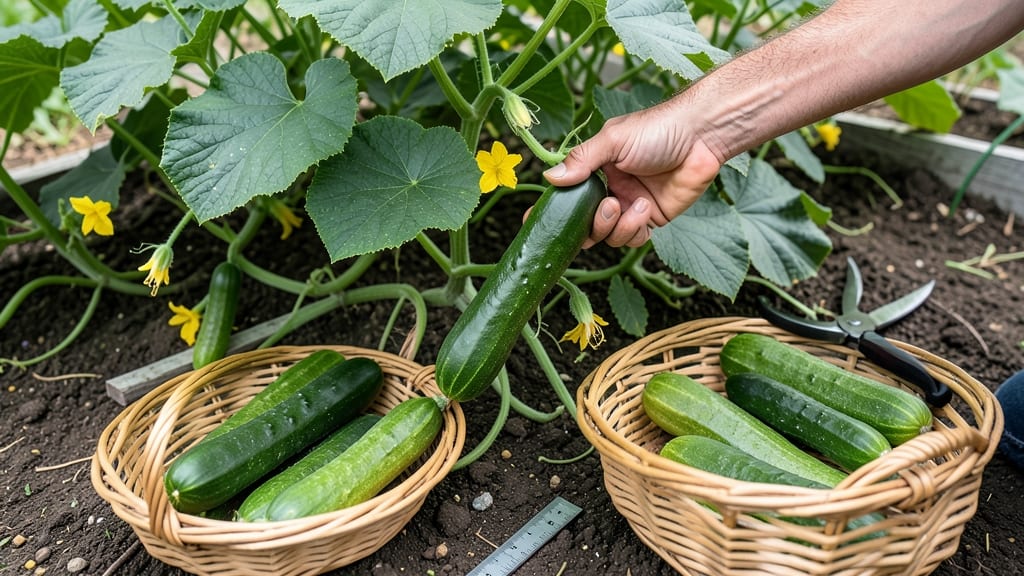
To pick your cucumbers at the perfect time means crunchy, seedless harvests that taste like a summer picnic 🥒 — and missing that window turns them tough, bitter, or seedy.
Nothing beats the satisfaction of biting into a crisp, seedless cucumber straight from your garden, but timing your harvest wrong means tough, bitter, or seedy produce. Here’s how to master the perfect pick for juicy, restaurant-quality cucumbers every time.
Most home gardeners wait too long, letting cucumbers grow past their prime. The key is watching for three visual cues: size, color, and texture. A cucumber ready to pick will be firm but not hard, with a deep green hue and a stem that snaps cleanly when bent.
In this guide, you’ll learn how to spot the ideal moment for slicing, pickling, and heirloom varieties, plus how often to harvest to keep your plants producing all season. Let’s get those cucumbers off the vine at their peak!

3 Visual cues to harvest cucumbers at peak freshness
Timing your cucumber harvest is an art that separates garden-fresh perfection from store-bought disappointment. The difference between a crisp, seedless cucumber and a woody, bitter one often comes down to these three key visual cues. Mastering them ensures your vines keep producing all season long.
Many gardeners make the mistake of waiting until cucumbers reach their maximum size, but by then, they’ve often passed their prime. Overripe cucumbers develop tough skins, bitter flavors, and large seeds—ruining their potential. Instead, focus on maturity indicators that guarantee peak flavor and texture.
Slicing cucumbers: 6–8 inches long (harvest before they grow longer). Pickling cucumbers: 2–3 inches (smaller = crunchier). Heirloom varieties may vary—check seed packets for guidance.
Look for a uniform, deep green color (or the variety’s natural shade, like yellow for 'Lemon Cucumber'). Avoid pale or blotchy spots—these signal overripeness or disease.
Press gently near the blossom end—it should feel firm but slightly soft (like a ripe avocado). If it’s hard, it’s underripe; if it’s mushy, it’s overripe. The stem should snap cleanly when bent.
Don’t overlook the stem color as an extra cue. For most varieties, the stem end should turn yellowish when the cucumber is ready. This change signals the cucumber has stopped growing and is at its sweetest. Ignore this, and you risk cucumbers that are too large, seedy, or tough.
Harvesting at the right time also prevents your plants from becoming overwhelmed. Overripe cucumbers steal energy from new flowers and fruits, reducing your overall yield. By picking consistently, you encourage your vines to produce more cucumbers all season.
Morning is the best time to harvest because cucumbers are cooler and firmer. Use a sharp pair of pruners or simply twist the cucumber gently until it separates from the vine. Avoid tugging—this can damage the plant and leave behind stems that may rot.
Pro tip: Keep a small basket or bucket nearby while harvesting to avoid dropping cucumbers. Bruised cucumbers spoil faster and develop off-flavors. Once picked, store them in the refrigerator’s crisper drawer for up to a week to maintain freshness.
If you’re growing multiple varieties, like both slicing and pickling cucumbers, harvest them separately. Pickling cucumbers need to be picked smaller and more frequently than slicing types to stay crisp. Label your harvests to avoid confusion!
Now that you’ve mastered these visual cues, your garden will yield cucumbers that are crisp, sweet, and seedless—perfect for salads, snacks, or pickling. Happy harvesting! 🥒
How often to pick cucumbers for maximum yield and quality
Consistent harvesting is the secret weapon behind a prolific cucumber vine. When you pick cucumbers regularly—every 2 to 3 days—you trigger your plants to produce more fruits. This feedback loop works because cucumbers are indeterminate plants, meaning they keep growing and producing as long as conditions are right.
Most gardeners fall into one of two traps: either they pick too infrequently, letting cucumbers overcrowd the vine, or they wait until cucumbers reach their maximum size, which often means they're past their prime.
The ideal frequency depends on your variety and growing conditions. In hot climates, you might harvest every 2 days, while cooler regions may only need every 3 to 4 days.
Leaving cucumbers on the vine too long doesn’t just ruin their flavor—it stresses the plant. Overripe cucumbers:
- Steal nutrients from new flowers
- Develop bitter, seedy interiors
- Increase disease risk from rotting
- Reduce future production by 30–50%
Action step: Check your vines every 2–3 days during peak production (June–August). If you see more than 3–4 cucumbers at once, it’s time to harvest!
For pickling cucumbers, which mature faster, aim to harvest every 1–2 days once they start producing. These tiny cucumbers (just 2–3 inches) can go from perfect to overripe in 24 hours.
I’ve seen gardeners accidentally let their pickling cucumbers grow into foot-long monsters—a crime against crunchy snacks!
Morning harvests are your best friend. Cucumbers picked in the cool morning hours stay firmer longer and taste sweeter. Plus, you avoid the afternoon heat stress that can make cucumbers wilting or sun-scorched before you even pick them.
Pro tip: Use a sharp pruner or garden shears to avoid damaging the vine, or gently twist the cucumber until it separates cleanly.
If your cucumber plants suddenly slow down production, it might be time to prune old vines. Healthy cucumber vines can produce for 8–10 weeks, but they need regular maintenance. Remove any yellow leaves or dead vines to redirect energy to new growth.
And watch for powdery mildew—a common issue when cucumbers aren’t harvested often enough, creating a humid microclimate on the vine.
To maximize your harvest, pair your picking schedule with proper watering and fertilizing. Cucumbers are heavy feeders, so a balanced fertilizer (5-10-10) every 4–6 weeks keeps them producing.
And always water at the base of the plant, not the leaves, to prevent fungal diseases that thrive in damp foliage. With this routine, you’ll enjoy a continuous supply of crisp, sweet cucumbers all season long! 🥒