
Trees
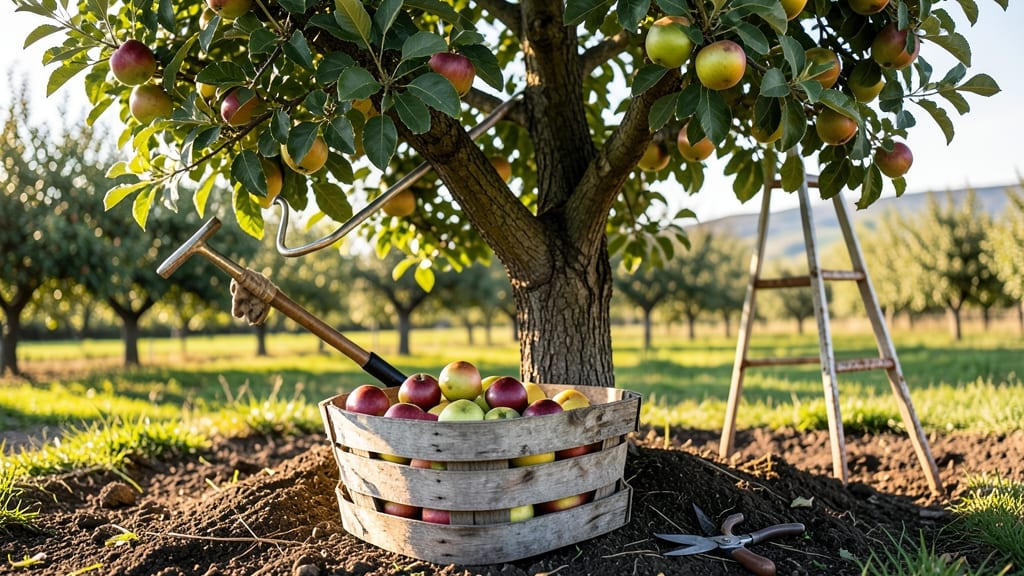
Harvesting your apple tree at the right time ensures sweet, juicy fruit that stores well and tastes incredible 🍎 — and missing the window means mealy, bland apples or even losing your crop entirely.
Picture this: you’ve waited all season for your apples to ripen, only to pick them too soon and end up with fruit that’s hard, tart, and barely edible. Or worse, you leave them too long, and they drop to the ground before you can enjoy them.
The difference between these two outcomes? Knowing the exact apple tree harvest time for your variety and climate.
Most apples ripen between late summer and early fall, but the timing depends on factors like your USDA zone, the specific variety (Fuji, Gala, or Granny Smith behave differently), and even the weather that year.
In this guide, I’ll walk you through the three foolproof signs your apples are ready—no guesswork involved—so you can enjoy a harvest that’s flavorful, firm, and perfect for eating, baking, or storing.
You’ll also discover how to adjust for regional differences, avoid common mistakes that ruin your apples, and even test for sugar content at home. By the end, you’ll feel like a pro, ready to turn your orchard into a year-round source of delicious fruit.

3 Unmistakable signs your apples are ready for harvest
Timing your apple harvest correctly is the difference between sweet, juicy fruit and tough, flavorless apples. Unlike many fruits, apples don’t ripen further after picking, so knowing the exact apple tree harvest time is crucial.
Even a few days early or late can ruin your crop’s quality. The key lies in three simple but often overlooked signs that reveal when your apples are truly ready to harvest.
First, let’s address the biggest myth: color alone isn’t enough. Many gardeners assume apples are ready when they turn red or yellow, but this varies wildly by variety. For example, Granny Smith apples stay green even when ripe, while Fuji apples develop a deep red blush.
Instead of relying solely on color, combine visual cues with tactile tests for foolproof results.
Climate plays a surprisingly large role in harvest timing too. Cooler regions like USDA Zone 6a often see apples ripen 2-3 weeks later than warmer zones. A late spring frost can delay maturity, while an early heatwave might speed it up.
Always adjust your expectations based on your local growing season and weather patterns.
🍎 3 Signs Your Apples Are Perfectly Ripe
- 🔴 Skin Color Change: Deepens to variety-specific hue (e.g., red blush, golden yellow). Test: Look at the sun-exposed side first.
- 🍂 Stem Separation: Fruit twists easily (90-degree turn) from branch without resistance. Test: Gently grasp and rotate—no force needed.
- 🌱 Seed Color: Seeds turn deep brown (not green or white). Test: Cut an apple open—ripe seeds are fully matured.
⚠️ Pro Tip: Combine all 3 signs for 100% accuracy—never rely on just one!
Let’s start with the most obvious clue: skin color. While not foolproof on its own, color changes are your first red flag (pun intended) that ripening is underway.
For red-skinned varieties like Gala or Honeycrisp, look for a deep, even blush that covers at least 50% of the apple’s surface. Yellow varieties like Golden Delicious should develop a rich golden hue, while green apples like Granny Smith will lighten slightly and feel firmer.
The stem separation test is where most gardeners go wrong—they either pull too hard or not enough. To perform it correctly, grasp the apple firmly between your thumb and fingers, then twist gently. If it separates cleanly with minimal resistance, it’s ready.
If the stem snaps or requires force, wait 3-5 more days. This test works because ripe apples produce a natural enzyme that weakens the stem’s attachment point.
Here’s a trick most harvest guides skip: check the seeds. Cut an apple open and examine the seeds. Ripe apples have fully brown seeds with no green or white remaining. If the seeds are still green or white, the apple needs more time on the tree.
This might seem like overkill, but it’s especially useful for storage varieties like Fuji or Rome, where seed maturity directly correlates with storage potential.
Climate affects harvest timing more than most gardeners realize. In cooler climates (like the Pacific Northwest), apples often ripen 2-3 weeks later than in warmer zones (like California’s Central Valley). A late spring frost can delay maturity by up to 10 days, while an early heatwave might speed it up.
Always track your local first frost date—apples harvested too close to frost lose flavor and texture quickly.
One common mistake is assuming all apples on a tree are ready at once. In reality, apples on the same tree can ripen days or even weeks apart. Start harvesting the earliest-ripening varieties first, then move to mid-season and late-season apples.
For example, McIntosh apples might be ready in early September, while Cortland apples peak in October. Use a harvest log to track ripening progress by variety.
If you’re still unsure, try the "finger press test". Gently press an apple with your fingertip—ripe apples yield slightly (like pressing a ripe avocado). If the apple feels rock-hard or squishy, it’s not ready.
This test works best on firm varieties like Granny Smith, which stay crisp even when ripe. For softer varieties like Pippin, a slight give is normal.
Remember: apples don’t ripen after picking. Once harvested, their sugar content and texture remain static. That’s why nailing the harvest window is critical. Store apples in a cool (32–40°F), humid environment to preserve quality.
With these three signs—color change, stem separation, and seed maturity—you’ll never guess again.
Apple variety harvest timing: when to pick 10 common cultivars
Timing your apple harvest correctly transforms your orchard from a gamble to a guaranteed success. Each variety has its own ideal harvest window, influenced by climate, sunlight, and even your USDA zone.
For example, Fuji apples in Zone 6a mature weeks earlier than Granny Smiths in the same zone. Understanding these differences means the difference between sweet, juicy fruit and bland, mealy disappointment.
Harvest windows also shift based on your location—northern climates may need to adjust for earlier frosts, while southern gardeners can stretch their season. I’ve included regional adjustments for each variety below, so you can fine-tune your timing.
Pro tip: Early-season varieties like Honeycrisp ripen in late August, while late-season storage apples like Braeburn hold until October.