
Picking
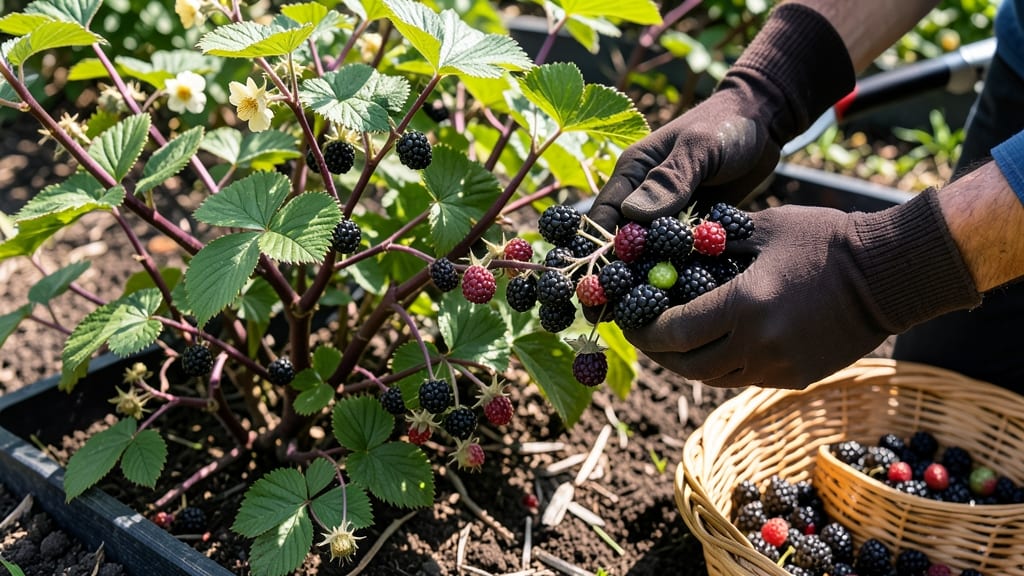
The blackberry harvest time ripens during July through September in most climates, but timing varies by variety and location—missing this window means berries turn mealy instead of jammy.
Picking at the perfect moment means the difference between jammy sweetness and mealy disappointment—here’s how to nail the harvest window every time.
In USDA Zone 6a, early varieties like Arapaho start ripening in late July, while late varieties like Cheyenne hold until early September. Sunlight and temperature shifts can push harvests earlier or later, so knowing your plant’s cues is key.
Below, I’ll show you three visual cues to spot peak ripeness, how climate affects timing, and how to store your harvest for maximum flavor.

3 Visual cues to identify perfectly ripe blackberries
Knowing exactly when to pick blackberries transforms your harvest from mealy mush to bursting sweetness. The secret lies in three simple visual cues that reveal peak ripeness. These aren't just random tips—they're science-backed indicators that align with sugar development and cell structure changes in the fruit.
When you master these, you'll never waste another berry on the vine!
First-time blackberry pickers often struggle because they focus on color alone. Sure, deep black or purple-black berries signal ripeness, but that's just the beginning. The real magic happens when you combine color with texture and stem separation.
This trifecta ensures you're picking berries at their absolute sweetest moment—when their flavor compounds have fully developed but before they start breaking down.
Why does this matter? Because underripe blackberries lack the jammy depth we love, while overripe ones turn to mushy pulp. The window for perfect picking is narrow—often just 24-48 hours—so these visual cues help you act fast.
Plus, harvesting at peak ripeness means better yield per plant and fewer wasted berries that birds or critters might snatch first.
- 1. Full Color Transformation: Look for deep black or purple-black berries (varies by variety). Avoid any with red or green patches—these need more time.
- 2. The Gentle Tug Test: A ripe blackberry should detach easily when you give it a light downward pull. If it resists, it's not ready yet.
- 3. The Squeeze Check: Press the berry gently—it should feel slightly soft but not mushy. Think "plump raisin" texture, not "overripe pudding."
Let's break down each cue with real-world examples so you can spot perfectly ripe blackberries in your garden.
Start with color assessment: hold the berry up to a white background (like a sheet or bucket) to see its true hue. Cheyenne and Triple Crown varieties turn deep black, while Arapaho stays purple-black.
Pro tip: Shiny berries are riper than dull ones—they've developed a natural waxy coating that protects their sugars.
Next, test the stem separation with what I call the "thumb test." Place your thumb under the berry and press upward gently. If it lifts away cleanly from the plant, it's ready. If the stem snaps or the berry tears, it's either too firm or too soft.
This test works best in the morning hours when berries are coolest and firmest, giving you the most accurate reading.
The texture test reveals the berry's internal ripeness without cutting it open. A ripe blackberry should have just enough give to suggest juiciness. To test, press your fingertip into the berry—it should leave a slight indentation but not crush completely.
Think of it like pressing a ripe peach: firm enough to hold its shape, but yielding just enough to know it's sweet. This cue helps you avoid the crunchy trap of underripe berries that taste bland.
Here's where many gardeners go wrong: they pick based on one cue alone. For example, someone might grab all the black berries without checking texture, only to find half are still hard inside.
Or they might rely solely on the tug test, missing berries that look ripe but are actually overripe. The key is to use all three cues together—color, texture, and stem separation—to confirm ripeness. This three-step process ensures you're always harvesting at peak flavor.
Why does this matter for your yield and flavor? Because blackberries continue to ripen after picking—but only up to a point. If you harvest too early, the sugars won't fully develop, leaving you with tart, underdeveloped fruit.
If you wait too long, the berries become seedy and mushy, losing their structural integrity. By using these visual cues, you're essentially locking in the sweetest possible moment for each berry.
One common question I hear is, "What if it's raining or the berries look ripe but the plant is wet?" In these cases, wait until the morning after the rain to harvest. Wet berries can dilute in flavor and may not give accurate texture readings.
Also, avoid harvesting in direct sunlight when berries are hot—this can make them appear riper than they are. Always pick in the early morning for the most accurate assessment.
Remember that blackberry varieties ripen at different rates, so what works for Cheyenne might not apply to Natchez. Always check your specific variety's characteristics, but these three visual cues will work universally.
With practice, you'll develop an almost instinctive sense for when blackberries are at their peak—making your harvests more productive and delicious every year.
Blackberry ripening stages explained: when to pick for maximum sweetness
Understanding the blackberry ripening stages is key to harvesting fruit at its sweetest. Blackberries transition through three distinct phases—green, pink, and fully ripe—each with unique characteristics that affect flavor and texture. Missing the window means sacrificing jammy perfection for bland or overly tart berries.
Climate plays a huge role in ripening speed. In warmer USDA zones (7-9), blackberries may ripen 2-3 weeks earlier than in cooler zones (5-6). Early-season varieties like 'Chester' ripen first, while late varieties like 'Natchez' hold onto their fruit longer.
Always check your plant’s specific variety for the best timing.
| Stage | Color | Texture | Harvest Time | Flavor |
|---|---|---|---|---|
| Green | Light green | Firm, hard | Not ready | Tart, sour |
| Pink | Pinkish-red | Slightly soft | Near-ripe | Balanced sweet-tart |
| Fully Ripe | Deep black | Plump, slightly soft | Ready to pick | Sweet, jammy |
At the green stage, blackberries are hard and unripe, often with a sour taste. This phase lasts 4-6 weeks after flowering, depending on warmth. Skipping this stage entirely is ideal—harvesting too early wastes your effort and attracts pests like birds and raccoons.
During the pink stage, berries soften slightly and develop a pinkish hue. This is the "almost there" phase, where flavor shifts from tart to sweet-tart. In cooler climates, this stage may linger longer due to slower ripening.
Test one berry by gently squeezing—if it’s still firm, wait 1-2 days before checking again.
True ripeness arrives at the fully ripe stage, marked by deep black color, a glossy sheen, and berries that detach easily with a slight tug. These berries are plump but not mushy—a perfect balance for fresh eating, freezing, or baking.
If left on the vine past this point, they’ll become overripe and attract fruit flies.
Pro tip: Harvest in the morning when berries are coolest and sweetest. Use a pair of clean pruners or your fingers to avoid damaging canes. For thornless varieties like 'Arapaho,' you’ll save your hands from pricks while picking!
🫐