
Picking
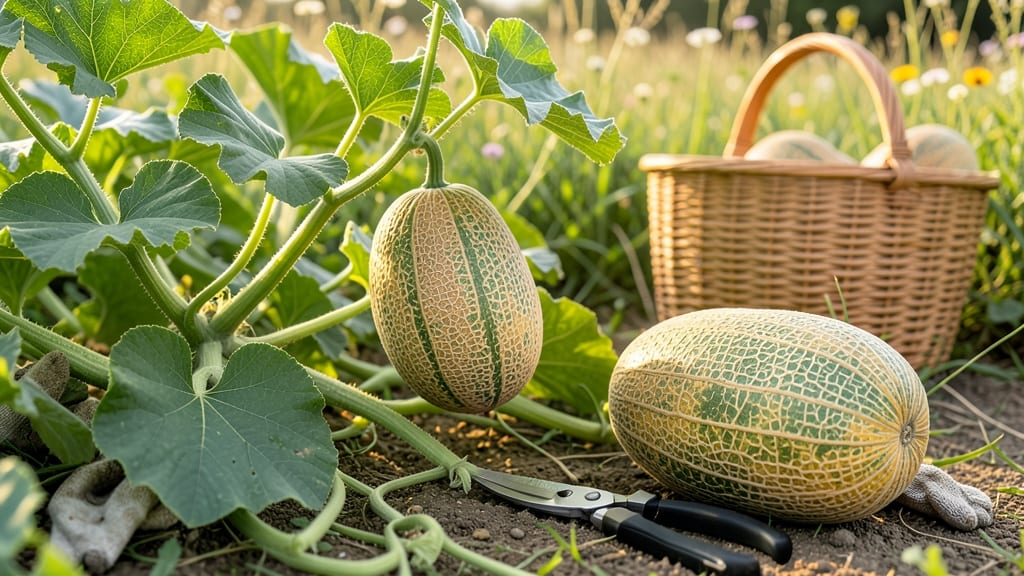
Knowing the exact cantaloupe harvest time 🍈 turns a guess into a guaranteed sweet reward—here’s how to spot the perfect moment before it slips away.
Picture this: you’ve nurtured your cantaloupe plants all season, and now the fruit is hanging heavy on the vine. But how do you know when to pick? Waiting too long means overripe mush, while harvesting too soon leaves you with bland, seedy disappointment.
The good news? Three simple visual cues will tell you the moment is right—no more second-guessing.
Beyond just counting days after flowering, the real secret lies in the rind’s creamy hue, the way the stem detaches with a gentle tug, and even the scent wafting from the blossom end. These signs don’t lie, and they work whether you’re in Zone 6a or further south.
In this guide, I’ll walk you through each step—from checking the skin’s texture to testing the weight—so you can pull that perfectly ripe cantaloupe off the vine every time. No more wasted effort, just sweet, juicy success.


3 Unmistakable visual signs your cantaloupe is ready to harvest
There’s nothing like biting into a cantaloupe that’s perfectly ripe—sweet, juicy, and bursting with flavor. But knowing when to harvest can be tricky, especially if you’re new to growing cantaloupes.
The good news? Mother Nature provides three clear visual cues that scream "harvest time!" If you learn to spot these signs, you’ll never miss the sweet spot again.
The key is paying attention to three specific areas: the stem, the skin texture, and the blossom end (that little "nose" at the bottom). When these three elements align, you’re looking at a cantaloupe ready to be picked.
But here’s the catch—some cues are easier to spot than others, and mistakes happen when you rush or overlook details. Let’s break down what to look for and what to avoid.
- 1. Stem Separation: The stem near the fruit should slip easily when you gently twist it. If it detaches with a slight tug, it’s ready! If it resists, wait a few days.
- 2. Skin Texture: Look for a creamy yellow or tan rind with dull, matte spots (not shiny). Avoid fruits with green patches—they’re not ripe yet.
- 3. Blossom End Color: The "nose" at the bottom should turn from green to creamy yellow or tan. This is your final confirmation that the cantaloupe is ready.
Let’s start with the most reliable sign: stem separation. When cantaloupes are ready, the stem near the fruit will begin to dry out and turn brown. This isn’t just a cosmetic change—it’s a signal that the fruit has fully matured and is detaching naturally from the vine.
To test this, grasp the stem between your thumb and forefinger and give it a gentle twist. If it separates easily (almost like a wishbone snapping), your cantaloupe is ready to harvest. If it resists, leave it on the vine for another day or two.
But here’s where many gardeners go wrong: they assume all cantaloupes behave the same way. In reality, some varieties—like muskmelons—might have slightly firmer stems even when ripe. If you’re unsure, check the other two cues before making your decision. Patience pays off when it comes to cantaloupes!
The skin texture is another dead giveaway. Ripe cantaloupes develop a creamy yellow or tan color with dull, matte patches where the sun doesn’t hit directly. These patches are a sign that the fruit’s sugars have fully developed.
Avoid cantaloupes with green spots—they’re still immature. Pro tip: Run your fingers over the rind. If it feels slightly rough or grainy, that’s another sign of ripeness. Smooth or shiny skin usually means the fruit is underripe.
Now, let’s talk about the blossom end, or the "nose" at the bottom of the cantaloupe. This is the part where the flower once was, and it’s one of the most telling signs of ripeness.
When ripe, the blossom end will turn from green to creamy yellow or tan, almost like a tiny sun. This color change happens because the fruit’s natural sugars concentrate there. If the blossom end is still green, the cantaloupe needs more time on the vine.
But if it’s brown or mushy, it might be overripe.
One common mistake I see is gardeners picking cantaloupes based on size alone. Just because a cantaloupe looks big doesn’t mean it’s ripe! Size can vary widely depending on the variety and growing conditions. Instead, focus on the visual cues we’ve discussed.
For example, a small cantaloupe with a creamy rind and a dry stem might be sweeter than a large one that’s still green. Trust the signs, not the scale!
Regional differences can also play a role in cantaloupe ripening. In hotter climates, like the Southwest or Southern states, cantaloupes might ripen faster and develop more intense colors. In cooler regions, like the Pacific Northwest, they might take longer to mature and have slightly paler skin.
Always adjust your expectations based on your local growing season and microclimate. If you’re in doubt, err on the side of waiting—overripe cantaloupes can become mealy and lose their sweetness.
Finally, don’t forget to inspect the entire fruit. Sometimes, cantaloupes can have uneven ripening, especially if they’re shaded by leaves or other fruits. Check all sides for consistent color changes and texture.
If one side looks riper than the other, it’s a sign that the fruit might not be fully mature yet. In this case, give it a few more days in the sun to even out.
Once you’ve confirmed all three visual cues, it’s time to harvest! Use a sharp knife or pruners to cut the stem about an inch above the fruit. This prevents the cantaloupe from bruising and extends its shelf life.
Store your freshly picked cantaloupe in a cool, dry place—it should continue to ripen slightly over the next few days, reaching peak sweetness.
Mastering these visual cues will turn you into a cantaloupe harvest pro. Soon, you’ll be the one your friends ask for advice when their melons aren’t quite right.
And remember: the best cantaloupes are the ones you pick at the perfect moment, not a day too early or too late. Happy harvesting! 🌱
How to test cantaloupe ripeness beyond visual cues: the smell, sound, and weight method
Even when your cantaloupe looks ripe, visual cues can fool you. That’s why I rely on three extra tests to confirm true ripeness: the aroma test, the stem sound, and the weight check.
These methods work especially well in hot climates where melons ripen fast or when you’re dealing with overcast conditions that hide color changes.
The first trick is the aroma test. A ripe cantaloupe releases a sweet, musky scent near its blossom end. Hold it close to your nose—if you smell nothing, it’s not ready. This scent is your best clue, especially for green-skinned varieties where color changes are subtle.
Next, test the stem detachment sound. Gently twist the stem near the fruit—if it makes a hollow, thudding sound (like knocking on a drum), it’s ripe. A dull thump means it’s still firm and unripe. This works even when the rind looks creamy but the fruit feels light.
Weight is the final check. A ripe cantaloupe feels heavy for its size because the seeds and flesh are fully developed. Lift it in your hand—if it feels light like a beach ball, it needs more time. This test is foolproof for avoiding watery, seedy interiors.
| Test Method | What to Look For | What to Avoid |
|---|---|---|
| Aroma Test | Sweet, musky scent near blossom end | No smell = underripe |
| Stem Sound | Hollow thud when twisted | Dull thump = still firm |
| Weight Check | Heavy for its size | Light = hollow inside |
False positives happen when cantaloupes look ripe but fail these tests. For example, a green-skinned variety might develop a creamy spot but still smell like nothing. Or, in hot, dry weather, melons can dry out prematurely, making them feel heavy but taste bland. Always combine these tests for accuracy.
Pro tip: If your cantaloupe passes all three tests but still feels slightly firm, give it 1-2 more days on the vine. The final ripening happens fastest in warm temperatures (80°F+). Once you master these methods, you’ll never waste another melon—just pure, sweet success every harvest.