
How To
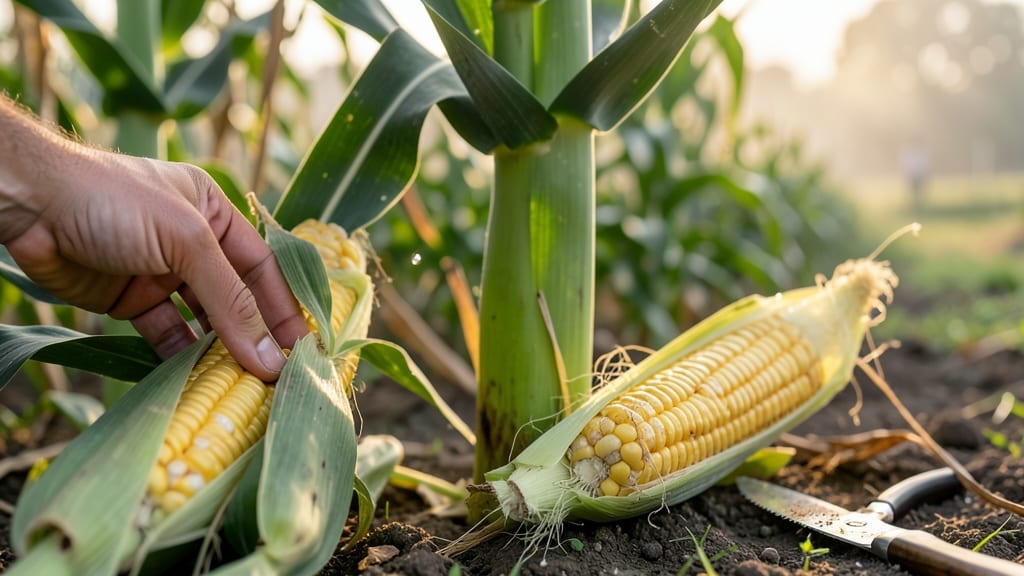
To know when to pick corn, watch for silks turning brown 🌽 and kernels that are plump and firm to the touch—these are the two most reliable signs.
Nothing beats the taste of fresh-picked corn straight from your garden—but timing is everything. Harvest too early, and you’ll get mealy, underdeveloped kernels; wait too long, and you’ll miss the sweetest window. The difference between perfect and disappointing corn often comes down to these simple checks.
Most gardeners focus on silk color, but kernel firmness and husk tightness are equally important. A quick piercing test with your thumbnail can reveal whether the milk inside is ready, and harvesting in the morning preserves that sweetness for hours longer.
These tricks have saved my harvest more times than I can count.
Below, I break down the exact visual cues to look for, the best time of day to harvest, and how to handle uneven ripening—so you never waste another ear of corn again.

5 Visual clues to determine when corn is ready for harvest
Mastering the art of corn harvesting starts with understanding its visual maturity cues. Unlike many vegetables, corn reveals its readiness through subtle but unmistakable changes in its silks, kernels, husks, and overall structure.
These five key indicators work together to guarantee you pick corn at its peak sweetness and texture. The good news? You don’t need fancy tools—just your eyes, fingers, and a little patience to observe these natural signals.
I’ve learned the hard way that relying on just one clue—like kernel size—can lead to disappointment. For example, I once harvested corn based solely on ear size, only to find the kernels were still starchy and underdeveloped.
That’s why combining these visual checks creates a foolproof system. Let’s break down each clue so you can confidently determine when your corn is ready to pull from the stalk.
🌽
- 1 Silk Color: The silks should turn completely brown and crispy. Green or moist silks mean the corn needs more time. This change signals pollination is complete and kernels are developing.
- 2 Kernel Size & Firmness: Kernels should be plump, firm, and about the size of a pencil eraser. Press a kernel with your fingernail—it should give slightly but not dent easily. If it’s small or hard, it’s not ready.
- 3 Ear Shape & Fullness: The ear should feel heavy for its size and look full from tip to base. Tap two ears together—they should sound solid, not hollow. Uneven ears may indicate poor pollination.
- 4 Husk Tightness: The outer husk leaves should pull back easily to reveal fully formed kernels. If the husk resists or the kernels are still covered, the corn needs more time. A tight husk can also signal drought stress.
- 5 Tapping Test: Hold two ears together and tap them gently. A deep, resonant thud means the kernels are fully developed. A dull or hollow sound indicates underripe corn. This test works best in the morning when kernels are crispest.
When I first started growing corn, I missed the silk color change because I was focused on kernel size. That led to a batch of corn that was large but still starchy. Now, I check all five clues before harvesting, and the difference in flavor is night and day.
For example, I once harvested a ear that passed the tapping test but had slightly green silks—turns out, those kernels were still developing and lacked sweetness.
Another pro tip: combine the tapping test with kernel firmness. If the ear sounds solid but the kernels dent too easily, it might be overripe. Overripe corn converts its natural sugars into starch, making it less sweet and more mealy.
The goal is to catch corn at that sweet spot where it’s firm, plump, and full of natural sugars.
Inconsistent ripening is common, especially in heirloom varieties or when growing in less-than-ideal conditions. If some ears mature faster than others, I recommend harvesting the earliest ones first and monitoring the rest closely. You can also try hand-pollination to improve uniformity, though this requires a bit more effort upfront.
For large gardens, consider planting succession crops every two weeks to stagger harvests and avoid a glut of corn all at once.
One mistake I see often is relying on calendar-based harvesting. Just because it’s July doesn’t mean your corn is ready! Factors like soil temperature, rainfall, and variety type can shift the timeline significantly.
For instance, early varieties like ‘Silver Queen’ may be ready in 60-70 days, while late varieties like ‘Country Gentleman’ can take up to 90 days. Always check the visual clues instead of guessing by date.
For the best results, harvest corn in the morning when temperatures are cool. This preserves sweetness and firmness. Store harvested corn in the refrigerator for up to a week, or blanch and freeze for long-term storage.
If you’re unsure whether your corn is ready, err on the side of harvesting a day early—you can always cook it, but you can’t un-harvest overripe corn!
🌾
Best time of day and seasonal factors that affect corn ripeness
Harvesting your corn at the right time of day makes all the difference in flavor and texture. I’ve learned that morning harvests consistently yield the sweetest corn because cooler nighttime temperatures slow down starch conversion in the kernels.
This means the natural sugars stay locked in, giving you that perfect sweetness we all crave. Aim to pick between 7 AM and 9 AM for maximum freshness.
Seasonal temperature fluctuations also play a critical role in corn ripeness. During hot summer days, corn matures faster due to accelerated photosynthesis. However, temperature swings between day and night can actually improve sweetness by slowing down starch buildup.
If you’re dealing with consistently high temperatures, check your corn 2-3 days earlier than usual to avoid missing the sweet window.
Early summer varieties, like 'Silver Queen' or 'Early Sunglow', typically mature in 60-70 days and should be harvested in late June or early July. These varieties benefit from cooler early-season temperatures, which naturally preserve sweetness.
In contrast, late-season varieties like 'Black Aztec' or 'Country Gentleman' take 90-100 days to mature and are best harvested in August, when daytime highs are still warm but nights cool down.
🌽 How Do You Know When to Pick Corn?
Use this quick checklist to confirm ripeness:
- Silks: Dry and brown (not green or moist)
- Kernels: Plump, firm, and release milky liquid when pierced
- Husk: Tight and pulls back easily, revealing fully developed kernels
- Ears: Feel heavy for their size, not light or hollow
Pro Tip: Harvest in the morning and cook within 2 hours to lock in sweetness.
If you’re growing corn in cooler climates or at higher elevations, expect a slightly longer maturity time. For example, in USDA Zone 5, corn may take 5-7 extra days to reach full ripeness compared to Zone 7.
Adjust your harvest schedule by monitoring kernel development rather than relying solely on days-to-maturity estimates. Keep an eye on the ear shape—fully developed kernels should be uniform and fill the entire ear.
One common mistake I’ve seen is waiting until the silks fall off completely, which often means the corn has passed its peak sweetness. Instead, harvest when the silks are dry and crumbly but still attached. This usually happens 1-2 days before they fall off naturally.
For sweet corn varieties, like 'Ambrosia' or 'Peaches and Cream', the sweetness window is even narrower, so check daily once the silks start drying.
To extend your harvest season, consider planting successive crops every 2 weeks starting in early spring. This staggered approach ensures a steady supply of fresh corn throughout the summer.
For example, plant your first batch in late April, the second in mid-May, and the third in early June. This way, you’ll have corn ready to pick from late June through August, giving you flexibility to enjoy it at its best.