
How To
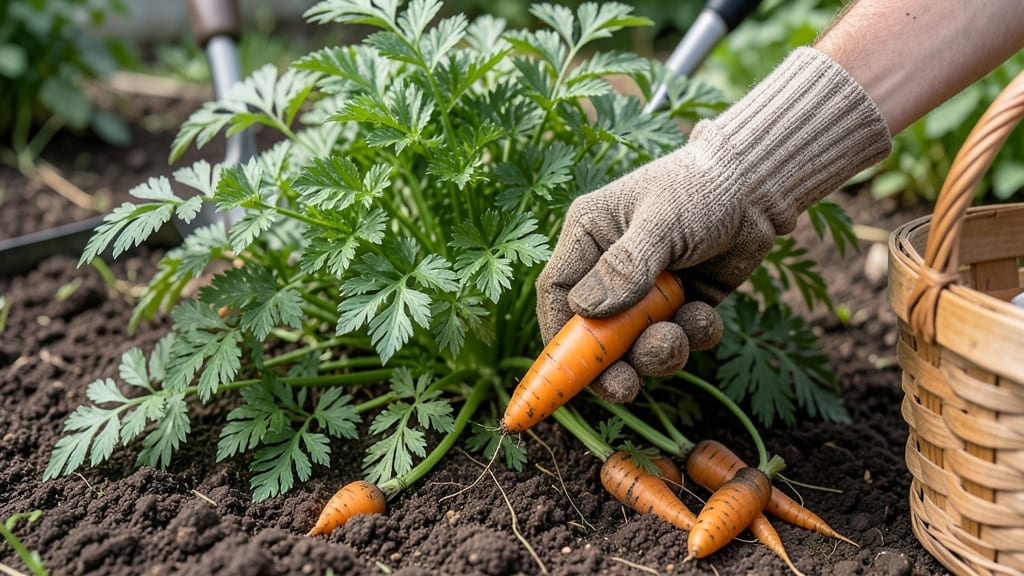
Harvesting carrots at the right time ensures tender, flavorful roots 🥕—and timing depends on when you plant, the variety, and a simple soil test.
Wondering why your carrots still feel stubborn in the soil after weeks of growth? The secret to harvesting perfect, tender carrots lies in timing—and the soil looseness test is your best friend.
Most carrot varieties take 60 to 80 days to reach ideal harvest size, but short-season types like 'Paris Market' can be ready in as few as 50 days.
The key is watching for 3-4 inch tall tops and a shoulder diameter of ½ to ¾ inch—but don’t skip the soil check.
Below, I’ll break down the exact growth stages, how to test soil firmness, and when to pull for baby carrots or full-sized roots—so you never harvest too early or too late.

Carrot growth timeline: how long until harvest-ready?
Carrots are one of the most rewarding root vegetables to grow, but their harvest timing can feel mysterious. Unlike leafy greens, you can't just snip them when they're big enough—you need to wait for the right soil conditions and root development.
Most varieties take 60 to 80 days from seed to harvest, but shorter varieties like 'Paris Market' can be ready in as few as 50 days, while long-season types like 'Danvers' may need up to 90 days.
The key to success lies in understanding your carrot variety, soil preparation, and growth stages. Skipping soil loosening or overcrowding plants can turn your harvest into a frustrating digging battle. I’ve learned the hard way—once, my carrots grew forked and woody because the soil was too compacted.
Let’s break down the timeline so you can avoid that fate and pull perfect, tender carrots every time.
| Stage | Days to Reach | Key Characteristics | Soil & Care Tips |
|---|---|---|---|
| Seed Germination | 7–14 days | Sprouts emerge ½" tall | Keep soil moist, 60–70°F |
| Early Growth | 20–30 days | Leaves 2–3" tall, roots pencil-thin | Thin seedlings to 2" apart |
| Active Root Development | 40–50 days | Leaves 4–5" tall, roots ½" diameter | Loosen soil, avoid waterlogging |
| Baby Carrot Stage | 50–60 days | Roots 2–3" long, vibrant color | Optional harvest or let mature |
| Full Maturity | 60–90 days | Roots 6–8" long, firm texture | Test soil looseness before pulling |
Your carrot variety plays a huge role in harvest timing. Short-season varieties like 'Little Finger' or 'Nantes' mature in 50–60 days, making them perfect for early spring or fall harvests.
Longer-season types like 'Chantenay' or 'Imperator' need 70–90 days and are ideal for summer planting. Always check the seed packet for specific days-to-maturity—this is your golden rule for planning.
Soil conditions are just as critical as timing. Carrots need loose, stone-free soil to grow straight and tender. Before planting, mix in 2–3 inches of compost and avoid working the soil when it’s wet—this creates clods that can deform your roots.
I once planted carrots in heavy clay soil, and half of them grew crooked because of hidden rocks. A quick soil test for pH 6.0–7.0 ensures optimal nutrient uptake.
Watering also affects your harvest window. Carrots need consistent moisture—about 1 inch per week—but avoid overwatering, which can cause splitting or rot. Mulch with straw to retain moisture and prevent soil crusting, which makes pulling carrots nearly impossible.
I’ve seen gardeners struggle to harvest because their soil turned to concrete after heavy rain. A layer of mulch saves you from that headache.
Don’t forget about seasonal adjustments. In cooler climates, plant early varieties in late winter for a spring harvest, while longer-season types thrive in summer’s warmth. If you’re in a hot region, opt for shade-tolerant varieties like 'Rainbow' and harvest in early morning to avoid sunscald.
My first attempt at growing carrots in July’s heat ended with bitter, woody roots—until I switched to shade cloth and adjusted my timing.
Finally, watch for harvest readiness signs. The tops should be 3–4 inches tall, and the shoulder of the root (the widest part) should be ½ to ¾ inch in diameter.
The color should be deep and even, and when you gently wiggle the carrot, it should pull out with minimal resistance. If it feels stubborn, wait a few more days—the soil might just need to dry out slightly.
Timing your carrot harvest isn’t just about counting days—it’s about reading
The soil looseness test: when to pull carrots without damage
Harvesting carrots at the perfect moment means understanding two key factors: soil firmness and root maturity. While most varieties reach harvest readiness in 60–80 days, a simple soil test can tell you exactly when to pull—without damaging delicate roots.
The finger-push method is my go-to trick to avoid woody, overgrown carrots that split or crack when pulled too late.
Start by checking the top growth. Carrots are ready when their foliage reaches 3–4 inches tall and the shoulder diameter is ½ to ¾ inch. But don’t rely solely on size—soil conditions play a huge role in whether roots will pull cleanly or snap.
Loose, crumbly soil means it’s time to harvest, while compacted soil signals you’re too early.
⚠️ callout warning ⚠️
If you wait too long, carrots develop hard, woody cores and cracked roots—making them nearly impossible to pull cleanly. Harvest within 1–2 weeks of soil readiness to avoid this! For baby carrots, pull when roots are 1–2 inches long (around 30–40 days for quick varieties).
🌱 Pro Tip: Test soil firmness in the morning after watering—roots pull easiest when soil is moist but not soggy.
The finger-push test is your secret weapon. Gently press your finger 1–2 inches deep into the soil around your carrot. If the soil feels loose and crumbly (like cake batter), your carrot is ready to pull.
If it resists or feels hard, wait 3–5 more days—especially in dry or compacted soil. This test works best in well-drained beds with sandy loam or amended soil.
Weather also affects harvest timing. After a heavy rain, soil becomes too soft, making roots prone to splitting or forking. Aim to harvest 2–3 days after rain when soil firms up slightly.
In hot, dry spells, carrots may mature faster, so check soil looseness every 2–3 days during peak summer heat. Always harvest in the morning when roots are cool and firm.
Look for visual cues beyond soil texture. Ready carrots have deep, consistent color (no green shoulders) and smooth, unbroken skins. If you see cracks or splits, you’ve missed the window—these roots are past their prime.
For long-season varieties like 'Danvers,' pull when roots reach 1–1.5 inches in diameter, while short-season types like 'Little Finger' are perfect at ½ inch.
Once you’ve confirmed readiness, grasp the foliage and gently twist the carrot while pulling upward. If it resists, wiggle slightly—never yank forcefully, or you’ll snap the root. Rinse immediately to remove soil, and store in a cool, dark place (like a root cellar) for up to 2 weeks.
For long-term storage, cure carrots in the sun for 1 hour before refrigerating.