
How To
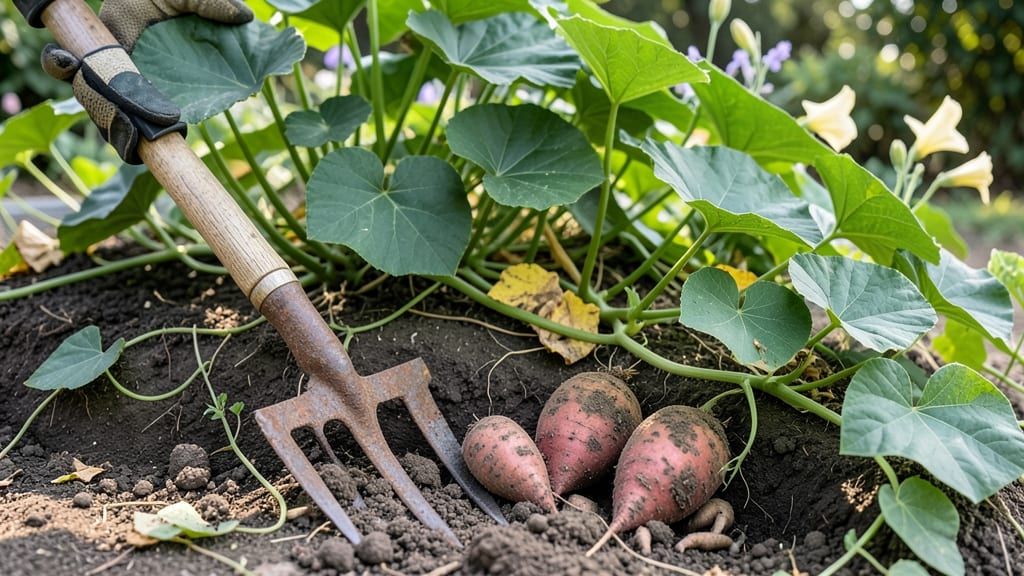
Harvesting sweet potatoes at the right time means the difference between perfectly sweet 🍠 tubers and dry, woody messes — and the window is narrower than you think.
Sweet potatoes left in the ground too long become tough and stringy, while digging too early gives you bland, starchy tubers that lack flavor. The 90- to 140-day range is your target, but climate, soil, and even a little frost can shift that deadline.
Here’s how to read your plants for the exact moment to dig — plus the one simple test (using just your finger) that tells you when they’re ready to pull.
You’ll also learn how to handle them after harvest to keep that sweetness locked in, whether you’re storing them for months or cooking them up right away.

Sweet potato harvest timeline: days to maturity and seasonal factors
Sweet potatoes thrive on patience, needing 90 to 140 days from planting to harvest for that perfect balance of sweetness and texture. The exact timing depends on your USDA hardiness zone and local climate, but most gardeners aim for late summer to early fall when frost threatens.
In Zone 6a, for example, this typically means harvesting between mid-August and October—just before the first frost arrives.
Understanding your frost-free days is key. Sweet potatoes are frost-sensitive, so if you're in a cooler zone, you may need to start harvesting earlier. For instance, in Zone 5, I often begin checking for harvest readiness by late July to avoid frost damage.
Meanwhile, gardeners in Zones 8-10 can enjoy a longer growing season, with harvests stretching into November or December.
The 90-140 day window is a general guideline, but don't rely solely on days after planting. Instead, focus on visual cues and soil conditions to determine when your sweet potatoes are truly ready.
For example, the vines will yellow and die back, and the skin will toughen—signs that the tubers are mature and sweet. Ignoring these cues can lead to woody, dry tubers if left too long or underdeveloped, starchy ones if harvested too early.
If you're growing short-season varieties like 'Beauregard' or 'Georgia Jet,' you'll likely harvest on the earlier end of the spectrum—around 90-110 days. These varieties are bred for cooler climates and can tolerate light frosts (though frost will still damage the vines).
For longer seasons, varieties like 'Bonita' or 'Centennial' can wait until 120-140 days, giving you larger, sweeter tubers.
Pay close attention to your local first frost date. In Zone 6a, where I garden, the average first frost hits around October 15. That means I start checking for harvest readiness by mid-September to ensure I don’t miss the window.
In warmer zones like Zone 9, you might have until November or December, but even there, the vines will eventually die back naturally.
One common mistake is overestimating the growing season. Just because your sweet potatoes haven’t reached maturity by your zone’s first frost doesn’t mean they’re still edible. The vines must die back for the tubers to fully develop their sweetness.
If frost hits before this happens, the tubers will be starchy and underdeveloped. To avoid this, I always plant a few extra slips to ensure at least some harvest, even if conditions aren’t ideal.
Once the vines turn yellow and dry up, it’s time to stop digging and start checking. Use the finger-press test (which we’ll cover in the next section) to confirm ripeness.
But remember, you only have a 2-3 week window between when the vines die back and when the tubers start to dry out in the soil. Miss this window, and you’ll end up with
The finger-press test: how to check sweet potato ripeness before digging
Timing your sweet potato harvest is all about reading the plants—not just counting days. While the 90- to 140-day range gives you a general window, your local climate and soil conditions can shift that deadline by weeks.
The finger-press test is my go-to method for pinpointing the perfect moment, and it takes just seconds.
This simple test checks for skin toughness and tuber size, two key indicators that your sweet potatoes are ready. But before you press, look for these visual cues: yellowing vines, dry foliage, and tubers at least 2-3 inches in diameter.
Together, these signs tell you it’s time to dig.
How to Perform the Finger-Press Test
- Step 1: Wait until vines turn yellow and start dying back naturally (or after a light frost in cooler zones).
- Step 2: Gently brush away soil around the base of a vine to expose a few tubers.
- Step 3: Press your finger firmly against the skin of a tuber. If it resists puncture and feels firm (not soft), it’s ready.
- Step 4: Check for 2-3 inch diameter—smaller tubers are still starchy and underdeveloped.
- Step 5: If skin is tough and dry (not moist), harvest within 1-2 days to avoid woody texture.
Don’t ignore the soil conditions—dry, well-draining soil is ideal for harvest. If your garden is soggy, wait until the soil dries out slightly to prevent cracked tubers. And if you’re in a frost-prone zone, harvest before the first frost hits, even if the finger test isn’t perfect.
Once you’ve confirmed ripeness, dig carefully with a fork or shovel to avoid piercing the tubers. Handle them gently—rough handling bruises the skin, which can lead to rot during storage.
Cure them immediately by placing them in a warm, humid spot (like a cardboard box) for 5-10 days to develop their sweet flavor.
Pro tip: If you’re unsure, harvest a few tubers early and taste-test them. Underripe sweet potatoes are starchy and bland, while overripe ones turn woody and dry. The finger-press test eliminates the guesswork, so you’ll always know when to dig for that perfect sweetness.