
How To
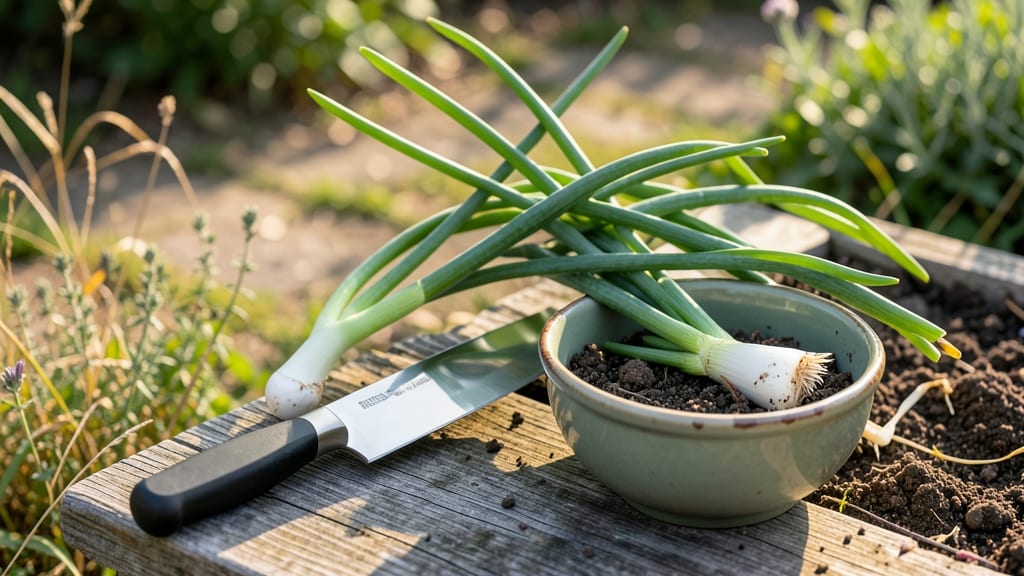
Harvesting green onions so they keep growing is easier than you think—just trim the outer leaves and leave the rest to regenerate 🌱.
Picture this: you’re about to chop up a fresh batch of green onions for dinner, only to realize you’ve bought the last one at the store.
With the right technique, you’ll never need to again. This method lets you harvest again and again, as long as you follow a few simple rules.
Most gardeners make one critical mistake—cutting too close to the base or taking too many leaves at once. That’s how you end up with a sad, stunted plant.
Instead, you’ll learn how to snip just the outer leaves while keeping the inner growth intact, ensuring your green onions bounce back stronger than ever.
Below, I’ll walk you through the exact steps: when to harvest, how to cut for maximum regrowth, and the care routine that keeps your plants thriving for months. Ready to grow your own endless supply?


Step-by-step guide to harvesting green onions without stopping growth
Green onions are one of the most rewarding plants to grow because they regrow after harvesting—if you do it right. The cut-and-regrow method lets you enjoy fresh green onions for months without replanting.
The key is knowing when to trim, how to cut properly, and how to care for the plant afterward. Let’s break it down so you can harvest endless green onions from a single plant!
Before you start, make sure your green onions are healthy and mature. Look for bright green leaves that are at least 6 inches tall and a white base that’s 2-3 inches long.
Avoid harvesting if the leaves are yellowing or wilted, as this can stress the plant and prevent regrowth. The right timing and technique make all the difference!
How to Harvest Green Onions So They Keep Growing
-
Step 1: Choose the Right Leaves
Select 3-4 outer leaves at a time. These are the mature, fully grown leaves that won’t stunt the plant’s growth. -
Step 2: Gather Your Tools
You’ll need a sharp pair of scissors or pruning shears to make clean cuts. Avoid using dull knives, as they can crush the stems. -
Step 3: Cut Just Above the Soil
Hold the leaves gently and cut them at the base, leaving about 1/4 inch of green above the soil line. This ensures the plant can regrow from the root. -
Step 4: Rinse and Store
Rinse the harvested leaves under cool water to remove dirt, then store them in a container with a damp paper towel in the fridge for up to 2 weeks. -
Step 5: Fertilize Lightly
After harvesting, add a balanced fertilizer (5-10-10) to the soil. Use 1 tbsp per 10 sq ft and water it in thoroughly to encourage regrowth. -
Step 6: Water Deeply
Water the plant deeply in the morning to replenish moisture lost during harvesting. Avoid overwatering, as soggy soil can cause rot. -
Step 7: Wait 2-3 Weeks for Regrowth
New leaves should sprout in 2-3 weeks. If growth is slow, check for sunlight, water, and nutrients—these are critical for regrowth. -
Step 8: Repeat the Process
Once new leaves reach 6 inches tall, you can harvest again. Repeat this cycle every 3-4 weeks for a continuous supply!
One of the biggest mistakes gardeners make is cutting too many leaves at once. If you remove more than 30-40% of the plant’s foliage, it can’t regrow effectively.
Stick to harvesting only the outer leaves and leave the inner ones intact. This ensures the plant stays strong and keeps producing new growth.
After harvesting, keep an eye on your green onions for signs of stress or disease. If the leaves turn yellow or mushy, it could be a sign of overwatering or fungal issues.
Adjust your watering schedule and ensure the soil has good drainage. A healthy plant will bounce back quickly with proper care!
For the best results, harvest green onions in the morning after watering. This ensures the leaves are crisp and hydrated, making them perfect for cooking or eating raw. Plus, harvesting in the morning gives the plant the rest of the day to recover and start regrowing.
If you’re growing green onions in containers or pots, the cut-and-regrow method works just as well. Just make sure your container is at least 6 inches deep to accommodate the roots. Container-grown green onions may need more frequent watering since they dry out faster than in-ground plants.
With this method, you can enjoy fresh green onions for months without buying a single bunch from the store. Not only does it save you money, but it also gives you organic, homegrown greens that taste better than anything you’ll find in a supermarket. Happy harvesting!
Why your green onions stop regrowing (and how to fix it)
Green onions are one of the easiest perennial vegetables to grow, but even the hardiest plants can struggle with regrowth issues. If your green onions keep dying back after harvesting, you're not alone—over-trimming, poor soil conditions, or insufficient sunlight are the top culprits.
The good news? Most problems have simple fixes that’ll have your green onions thriving again in no time.
First, let’s address the most common mistake: cutting too aggressively. Many gardeners assume they need to trim all the way to the base, but this weakens the plant’s ability to regenerate.
Green onions store energy in their white bulb, so preserving at least 1-2 inches of the base is crucial for future growth. Even a small remnant can regrow into a full harvest.
⚠️ Warning: How NOT to Harvest Green Onions
❌ Over-trimming: Cutting below 1 inch of the base starves the plant of energy reserves. ❌ Wrong timing: Harvesting when leaves are yellowing or stunted signals stress. ❌ Improper tools: Dirty or dull scissors can introduce disease or tear leaves.
✅ Do this instead: Use clean, sharp scissors and cut just above soil level, leaving the white bulb intact. Harvest outer leaves first to avoid shocking the plant.
If your green onions are yellowing or showing stunted growth after harvest, check your soil quality. Green onions thrive in well-draining, nutrient-rich soil with a pH between 6.0 and 7.0. If your soil is compacted, depleted, or waterlogged, the roots can’t absorb the nutrients they need.
Amend your soil with compost or aged manure before replanting, and consider adding a balanced fertilizer (like 5-10-10) every 4-6 weeks during the growing season.
Another silent killer of green onion regrowth is insufficient sunlight. These plants need at least 6 hours of direct sun daily to produce strong, crisp leaves.
If your green onions are growing indoors or in shade, they’ll stretch toward light (a condition called etiolation) and produce weak, leggy growth. Move your plants to a sunnier spot or supplement with a grow light if natural light is limited.
Even a few extra hours of sunlight can make a dramatic difference in regrowth.
For weak regrowth, focus on consistent watering and mulching. Green onions prefer moderate moisture—water deeply every 3-5 days, ensuring the soil stays evenly damp but not soggy.
A layer of organic mulch (like straw or grass clippings) helps retain moisture, regulate soil temperature, and suppress weeds, all of which contribute to healthier regrowth. Avoid overhead watering, which can spread fungal diseases like downy mildew.
Finally, if your green onions are bolting (sending up a flower stalk), they’re signaling stress—often due to heat, drought, or overcrowding. To prevent bolting, harvest regularly, keep soil moist, and provide afternoon shade during hot summers.
If bolting occurs, you can still harvest the leaves and bulb before seeds form, but the plant may not regrow as vigorously afterward. In this case, treat it as a one-time harvest and replant new seeds for future cycles.
With these fixes, your green onions should bounce back stronger than ever. The key is patience and consistency—treat your plants like a renewable resource, and they’ll reward you with endless harvests all season long. Happy growing! 🌱