
How To
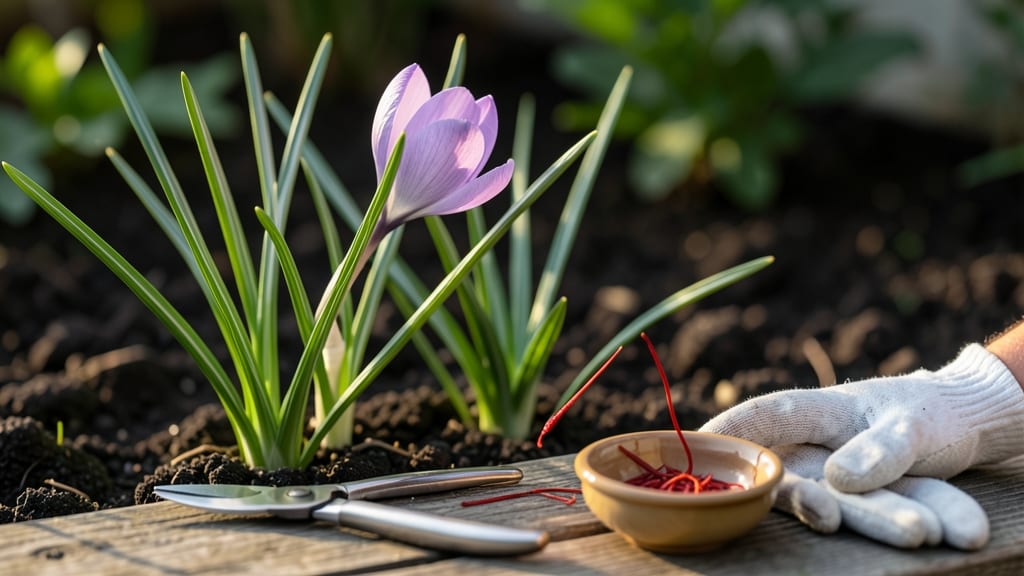
To harvest saffron threads from 🌼 Saffron Crocus, you’ll need to catch them at the perfect moment—when the flowers open but before they wilt.
Picture this: your garden bed bursts with delicate purple blooms, but if you wait too long, those golden threads turn to dust. That’s why timing is everything—harvesting too early or too late ruins the flavor and color you’ve worked so hard to cultivate.
This guide breaks down the exact 3-day window to pick your stigmas, the tools you’ll need, and how to dry them properly to preserve their potency. We’ll also cover the common mistakes that turn a great harvest into a disappointment.
By the end, you’ll know how to maximize your yield while keeping those threads vibrant and full of flavor—just like the pros do.

When to harvest saffron crocus for optimal thread quality
Harvesting saffron threads at the wrong time can ruin months of effort. The 3-day window between when the 🌼 Saffron Crocus flowers fully open and begin wilting is your golden opportunity. Miss it, and you’ll end up with pale, brittle threads that lack flavor and potency.
This precise timing ensures maximum yield while preserving the vibrant color and rich aroma that make saffron so valuable.
Timing depends on three key factors: moon phases, temperature thresholds, and visual cues like bud color and flower opening patterns. For instance, harvesting during a waxing moon (when the moon is growing brighter) aligns with the plant’s natural energy, often resulting in more robust stigmas.
Meanwhile, temperatures between 50°F and 65°F create ideal conditions for harvesting—too hot or cold can stress the flowers and reduce quality.
Visual cues are your best guide. Look for fully open purple petals with bright red-orange stigmas that are 1-1.5 inches long. These threads should detach easily from the flower’s center when gently touched. If the flowers are still partially closed or the stigmas appear pale, they’re not ready yet.
Morning is the optimal harvest time, ideally between 8 AM and 10 AM, when morning dew is still present. This timing ensures the stigmas are fully hydrated and at their peak potency.
Avoid harvesting in the afternoon or evening, as the flowers may start to wilt, reducing thread quality.
Here’s a quick checklist to confirm readiness: the buds should be fully open, the stigmas should be elongated and bright, and the threads should separate effortlessly. If you’re unsure, wait another day—patience pays off when it comes to saffron.
| Harvest Condition | Optimal Specification | Action Required |
|---|---|---|
| Moon Phase | Waxing moon (growing brighter) | Harvest during this phase for stronger stigmas |
| Temperature Range | 50°F to 65°F | Avoid extreme heat or cold |
| Flower Opening | Fully open purple petals | Harvest when petals are wide open |
| Stigma Color | Bright red-orange | Pale stigmas indicate underripe threads |
| Stigma Length | 1-1.5 inches | Shorter stigmas are not fully developed |
| Time of Day | 8 AM to 10 AM | Harvest in morning dew for peak quality |
| Thread Detachment | Effortless separation | Threads should pull away easily from the flower |
Beyond the visual cues, pay attention to the weather forecast for the next few days. If rain is predicted, harvest sooner rather than later—wet stigmas can mold or lose potency. Clear, dry mornings are ideal for harvesting, as they allow the stigmas to dry naturally without humidity interference.
Another pro tip: harvest every 2-3 days during the peak blooming period. This ensures you catch every flower at its prime, maximizing your yield. Keep a small notebook nearby to track which flowers are ready—this helps you stay organized, especially if you’re harvesting from a large bed.
If you’re new to saffron harvesting, start small with just a few flowers to practice. This way, you’ll get a feel for the texture and appearance of perfectly ripe stigmas. Over time, you’ll develop an instinct for when to harvest, making the process faster and more efficient.
Remember, the goal is to harvest threads that are bright, vibrant, and full of flavor. By following these guidelines, you’ll ensure your saffron is as potent as it is beautiful—ready to be dried and stored for future use in cooking or other applications.
Step-by-step saffron harvesting process: from flower to thread
Now that you’ve identified the perfect 🌼 Saffron Crocus flowers ready for harvest, it’s time to extract those precious threads with precision. The process is delicate—one wrong move can damage the stigmas or contaminate your harvest.
Start by gathering your tools: a small pair of sharp scissors or your fingertips (for gentle extraction), a clean white cloth or tray, and gloves to protect your hands from the flower’s mild irritants.
Work quickly but carefully in the early morning hours, when the flowers are at their peak. Avoid direct sunlight on your harvested stigmas, as it can cause them to oxidize and lose color. Place your tray in a shaded, well-ventilated area to keep the threads cool while you work.
If you’re harvesting a large quantity, consider using a small mesh bag to collect the stigmas temporarily—this prevents them from sticking together or getting crushed.
- 1
- 2
- 3
- 4
- 5
One of the most critical mistakes beginners make is overhandling the stigmas. Every time you touch them, you risk transferring oils from your skin, which can dull their color and flavor. Always wear gloves and use clean tools to minimize contamination.
Another common error is drying the stigmas too quickly—this can turn them brittle and reduce their potency. Aim for a slow, even drying process in a controlled environment.
After 24-48 hours, check your stigmas for dryness. They should feel light and crisp to the touch, with no moisture remaining. If they still feel damp, give them another 12-24 hours. Once fully dried, store them in an airtight container away from light and heat.
Properly dried saffron threads can retain their flavor and color for up to 2 years—a testament to your careful harvesting and drying efforts.
For large-scale harvests, consider using a dehydrator set to 95°F (35°C) for 6-8 hours. This method ensures even drying without risking overheating. Just be sure to spread the stigmas in a single layer on the dehydrator trays to prevent clumping.
Whether you dry them naturally or with a dehydrator, the key is patience and consistency—rushing the process will compromise your saffron’s quality.
By following these steps, you’ll transform your 🌼 Saffron Crocus flowers into high-quality threads that rival commercial saffron. The satisfaction of harvesting your own saffron—from flower to thread—is unmatched, and the flavor you’ll experience in your dishes will be a reward worth every careful step.