
How To
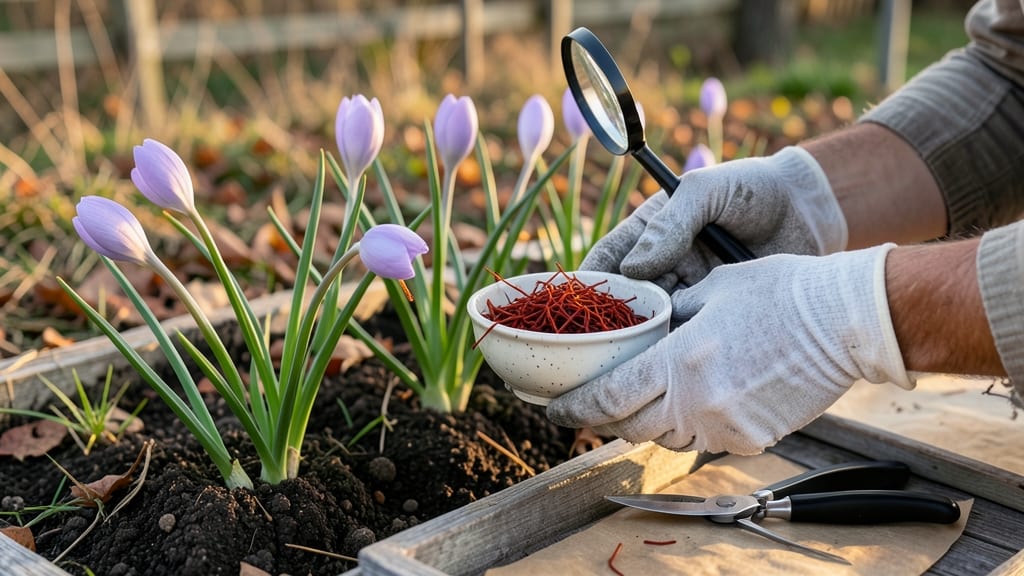
To harvest saffron from Saffron Crocus 🌼 flowers, you’ll need to catch those delicate stigmas at their peak—just as they turn from deep red to golden, when their flavor and aroma are strongest.
Saffron’s delicate golden stigmas are the world’s most expensive spice—but harvesting them at the perfect moment means the difference between a meager yield and a bounty of premium-quality threads.
This isn’t just about timing; it’s about technique. One wrong move, and you’ll crush the threads or miss the harvest window entirely.
Below, I’ll walk you through the exact steps to pick, dry, and store saffron like a pro—so you end up with vibrant, potent threads worth their weight in gold.
From recognizing the 3 key cues that signal harvest time to avoiding common mistakes that ruin quality, you’ll learn how to maximize every flower’s potential without damaging a single thread.

3 Key cues to identify the perfect saffron harvest time
Harvesting saffron at the wrong time can turn your golden threads into bitter, low-quality scraps. The difference between premium and mediocre saffron starts with recognizing three critical cues—visual signals from the flower itself and environmental conditions.
These cues, backed by botanical science, ensure you pick stigmas at peak potency and yield.
First, focus on the flower's age. Saffron crocus blooms only once per year, typically in late fall, after a summer dormancy. The flowers emerge from the ground as vibrant purple trumpets, signaling it's time to pay attention.
But not all blooms are ready for harvest—you must wait for the perfect moment when the flower is fully mature but still fresh.
Botanists agree that the stigma color is the most reliable indicator. When ready, the three stigmas (the saffron threads) turn from green to deep red, extending beyond the petals like tiny crimson threads.
This color change indicates the stigmas have developed their signature aromatic compounds and picrocrocin, the compounds that give saffron its flavor and color.
Here’s how to spot the perfect harvest-ready stigmas:
Don’t overlook the weather conditions on harvest day. Ideal weather is dry and sunny, with temperatures between 50°F and 70°F (10°C–21°C). Humidity can cause the stigmas to become waterlogged, while wind may scatter delicate flowers before you can harvest them.
Early mornings are best—flowers open fully by sunrise, and the stigmas are at their driest and most aromatic.
Timing is everything. If you harvest too early, the stigmas won’t have developed their full flavor compounds. Too late, and they’ll turn brown and lose potency. The 3–5 days window after full bloom is your target.
During this time, the stigmas transition from vibrant red to a slightly faded hue, signaling they’re ready to be picked.
Pro tip: Use a magnifying glass to inspect the stigmas. At peak harvest, they’ll appear plump and slightly curled, not wilted or shriveled. This visual cue ensures you’re picking stigmas at their most potent.
Overlooking this detail can mean the difference between saffron worth $5,000 per pound and a lower-grade product.
Environmental stress, like sudden temperature drops or heavy rain, can also affect harvest quality. If your region experiences unpredictable fall weather, consider planting saffron crocus in a sheltered location or under a cloche to protect the flowers.
This small adjustment can preserve the integrity of your harvest and maximize yield.
Finally, trust your senses. The best saffron stigmas emit a distinctive honey-like aroma when crushed between your fingers. If you’re unsure whether a flower is ready, wait another day. Patience here pays off—rushing the harvest can compromise both quality and quantity.
Remember, saffron is a labor-intensive crop, and precision at this stage is key to a successful harvest.
By mastering these three key cues, you’ll transform your saffron harvest from a gamble into a guaranteed success. The next step? Learning how to handle and dry those precious threads to preserve their color, aroma, and flavor—we’ll cover that in the next section.
Step-by-step saffron harvesting process (with common mistakes to avoid)
Harvesting saffron requires precision and patience—one wrong move can turn golden threads into brittle waste. The 3 red stigmas inside each purple crocus flower must be picked at peak maturity, typically 2-3 days after full bloom.
Morning harvests yield the freshest stigmas, as evening humidity can degrade quality. I’ve learned this the hard way: overripe stigmas lose color and potency, while underripe ones won’t separate cleanly.
Gather your tools before starting: sterilized scissors or tweezers, a dark glass jar for storage, and a white surface (to spot hidden debris). Wear gloves to avoid skin oils contaminating the delicate threads.
Pro tip: Harvest on dry mornings—dew can cause mold during drying. Even experienced growers like me once lost a batch because we ignored this simple rule.
⚠️ callout-warning ⚠️
Saffron stigmas are fragile—handle them like glass. Even a gentle squeeze can crush them, reducing value by 30-50%. Never pull them by force; they should slip out effortlessly when mature. Tool tip: Use tweezers for precision over fingers.
✅ Do: Pinch the stigma just below the base where it meets the flower.
❌ Don’t: Twist or yank—this breaks threads and ruins quality.
Start by selecting fully open flowers with bright purple petals. Gently grasp the stigma cluster (3 threads + white style) and pull upward at a 45-degree angle. The threads should come out cleanly—if they resist, the flower isn’t ready yet.
Discard any green or mushy stigmas immediately, as they’ll spoil faster. I once kept a half-ripe batch "just in case," only to find mold after drying—never do this!
Once harvested, lay stigmas flat on a paper towel to air-dry for 2-3 hours in a shady, dry place. Avoid direct sun—it can bleach the color. After initial drying, transfer them to a dark glass jar (light degrades potency).
Store in a cool, dark place (like a pantry) for up to 1 year. Humidity is the enemy: a silica gel packet in the jar prevents clumping.
Common post-harvest mistakes include skipping the drying step or storing in plastic containers. I’ve seen beginners rush drying with an oven—big no! Heat destroys volatile oils that give saffron its aroma.
For best results, dry at room temperature (68-72°F) for 10-14 days, stirring gently every 2-3 days to prevent clumping. Test dryness by checking for brittleness—they should snap cleanly when bent.
Yield varies by plant: a single saffron crocus produces 5-15 threads, worth $5-$20 per gram at market rates. To maximize output, harvest early in the morning when stigmas are firm and dry.
Keep a harvest journal to track flower counts and thread quality—this helps refine your technique year after year. Remember, patience pays: the first harvest might be small, but with practice, you’ll perfect the art of turning purple blooms into golden threads. 🌼