
How To
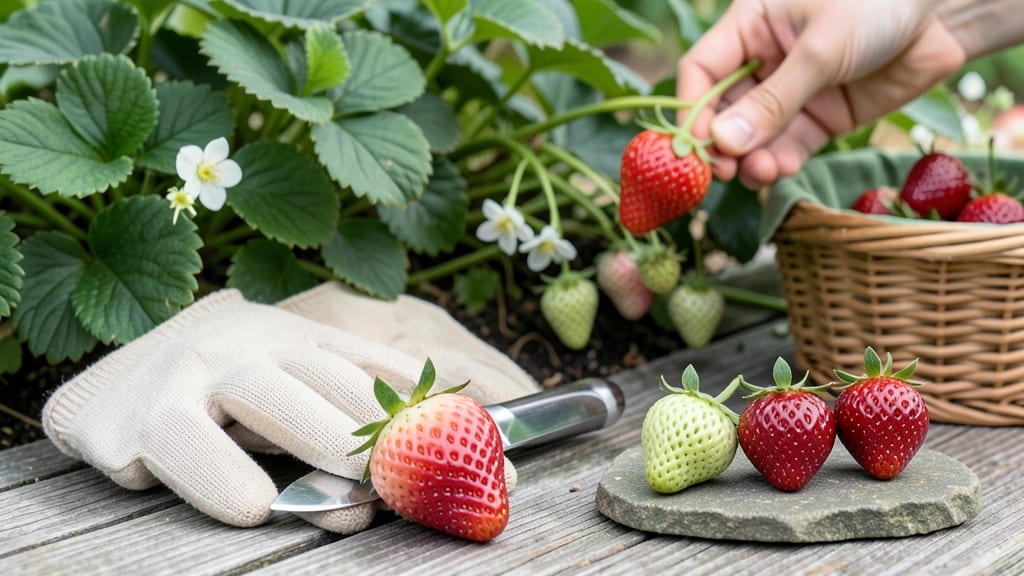
Knowing when to pick a strawberry means the difference between a burst of sweet, juicy perfection and a bland, underripe bite—here’s how to get it right every time.
Picture this: you’ve been waiting all season for that first ripe 🍓, only to pull one that’s still hard or mealy. That’s the moment you realize timing is everything.
The good news? With a few simple checks—color, firmness, scent, and even how the fruit detaches—you’ll never miss the sweet spot again.
Strawberries ripen at different rates depending on your zone, variety, and even the weather. In Zone 6a, June-bearing types peak in late June, while everbearing varieties might give you two harvests—one in summer and another in fall.
But no matter the type, the same rules apply: wait for full color, a gentle give when squeezed, and that unmistakable sweet aroma.
Below, I’ll walk you through the exact steps to test ripeness, plus pro tips to extend your harvest and salvage fruit that’s overstayed its welcome on the vine. Ready to turn your patch into a flavor-packed success?


5 Visual and physical signs your strawberries are ripe and ready
There’s nothing worse than biting into a strawberry that’s either underripe and tart or overripe and mushy. Knowing exactly when to pick ensures you get that perfect balance of sweetness and juiciness.
The trick is to look for a combination of visual cues and physical signals that tell you the fruit is at its peak. I’ve learned the hard way—when I ignore these signs, my strawberries end up either too firm or collapsing into a pulp in my basket.
The best time to harvest is in the early morning when temperatures are cool. This helps preserve the fruit’s flavor and texture. If you’re unsure whether a strawberry is ready, don’t worry—I’ll walk you through the five foolproof signs to look for, so you’ll never miss the window again.
Trust me, your taste buds will thank you!
🌱 5 Signs Your Strawberries Are Ripe and Ready
-
1. Uniform Color
Fully red, yellow, or white (depending on variety), with no green patches. June-bearing varieties should be deep red all over. -
2. Plump and Firm (But Slightly Soft)
Gently squeeze the berry—it should feel firm yet yield slightly under gentle pressure. If it’s rock-hard, it’s not ready. -
3. Easy Stem Detachment
The stem should snap off cleanly when you pull it gently. If it resists or tears, the berry isn’t ripe yet. -
4. Sweet Aroma
A ripe strawberry will have a fruity, sweet scent. If it smells bland or sour, it’s not ready. -
5. Size Matters (But Not Too Much)
Strawberries should be full-sized for their variety, but not oversized or misshapen. Overly large berries often lack flavor.
One of the biggest mistakes I see gardeners make is waiting too long for strawberries to turn red. By the time they’re fully red, they might already be overripe and prone to bruising.
Instead, focus on the combination of color and firmness. For example, a Albion strawberry (a June-bearing variety) should be bright red but still firm to the touch.
Another common pitfall is picking strawberries when they’re still attached to the cap. While some varieties (like everbearing types) can be harvested this way, most strawberries develop their full flavor once the cap detaches naturally.
If you’re unsure, give the berry a gentle tug—if the cap comes off easily, it’s ready!
Climate plays a role too. In hotter regions, strawberries may ripen faster, so check them every 2-3 days. In cooler areas, they might take longer.
I once grew strawberries in Zone 5, and they needed an extra week to ripen compared to my friend in Zone 8. Always adjust your harvesting schedule based on your local weather patterns.
If you’re growing multiple strawberry varieties, pay attention to their specific ripening times. For instance, day-neutral varieties like Seascape produce fruit throughout the season, while June-bearing varieties like Chandler have a single, massive harvest window. Knowing these differences helps you avoid missing the perfect moment.
Pro tip: Use a small basket or clippers to harvest strawberries. Twisting them off the plant can damage the fruit or the mother plant, reducing next year’s yield.
I always keep a pair of clean scissors handy to snip the stems cleanly—it makes all the difference in storage life and presentation.
Finally, don’t forget to rotate your harvesting. Check strawberries on different plants every few days, as they don’t all ripen at once. This ensures you get a steady supply of fresh, flavorful berries all season long.
When you follow these signs, you’ll never end up with a basket of underwhelming strawberries again!
Strawberry ripeness by variety: when to pick June-bearing vs. everbearing vs. day-neutral
Not all strawberries ripen on the same schedule—understanding your variety’s harvest window is key to avoiding empty-handed frustration. June-bearing types deliver a single massive harvest in late spring/early summer, while everbearing varieties produce two smaller flushes (summer and fall), and day-neutral types keep giving throughout the season.
Climate plays a huge role too: in Zone 6a, June-bearing strawberries peak in late June, but in warmer zones like Zone 8, they may ripen weeks earlier.
Your strawberry variety determines not just when to pick, but also how often you’ll need to check your plants. June-bearing varieties like Chandler or Albion produce all their fruit in 2-3 weeks, so daily inspections become essential.
Everbearing types like Ozark Beauty give you a 6-8 week harvest window with breaks in between, while day-neutral varieties like Seascape reward you with continuous production from spring until frost.
The biggest mistake I see gardeners make is treating all strawberries the same. June-bearing varieties demand daily checks during their peak window, while everbearing types need weekly inspections with a pause between flushes.
For day-neutral varieties, I set a reminder to check every 3-4 days—they’re prolific but can overwhelm you if you’re not prepared.
In my Zone 6a garden, I mark my calendar for June 15 as the start of June-bearing harvest season, but in Zone 9, gardeners often start picking by early May.
Temperature extremes can throw off ripening schedules. A heatwave might cause June-bearing strawberries to ripen 2 weeks early, while a cool snap can delay them until August.
I once had my Chandler strawberries ripen in mid-July after an unusually cool June, and they were just as sweet as when picked in June! Pay attention to your local 10-day forecast—if highs are predicted above 85°F, check your berries more frequently.
For everbearing varieties, the second harvest often arrives when gardeners are already tired of strawberries. Don’t skip these! The fall crop tends to be sweeter and more concentrated after summer’s heat. I’ve found that Ozark Beauty produces its best fall berries when given extra compost in early September.
The trade-off? These late-season strawberries are more vulnerable to bird damage, so I cover my beds with lightweight netting by mid-September.
If you’re growing multiple varieties, create a simple harvesting schedule. I use a whiteboard in my garden shed to track ripening stages by variety.
For example: - June 15-30: June-bearing peak (Chandler, Albion) - July 10-August 15: Everbearing first flush (Ozark Beauty) - September 1-October 15: Everbearing second flush + day-neutral (Seascape) This system helps me rotate harvesting and prevents overloading my kitchen with berries all at once.
Remember that climate adaptation is key. In northern regions, June-bearing varieties might not ripen until late July, while southern gardeners often harvest by mid-June. The same variety can ripen 3-4 weeks earlier in Zone 8 compared to Zone 5.
When in doubt, check your local cooperative extension service for variety-specific harvest dates—your county agents have tested these timelines in your exact growing conditions.