
Picking
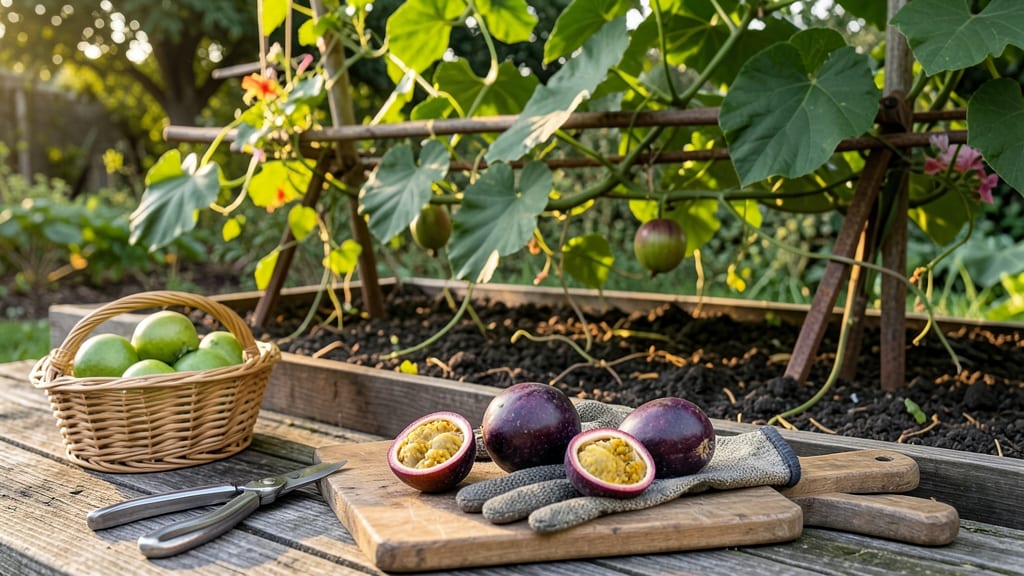
The time to harvest passion fruit 🍈 depends on color, texture, and a few simple tests that turn picking into a sensory experience—no guesswork required.
Picture this: you reach for a fruit that’s deep purple (or golden, if you’re growing a different variety), and it gives just slightly when you press it, like a ripe avocado. That’s your cue—harvest it now, and you’ll taste the sweet, tangy perfection you’ve been waiting for.
But timing isn’t just about the fruit’s appearance. Climate, variety, and even the time of day play a role in when passion fruit reaches peak ripeness. In tropical regions, you might harvest year-round, while cooler zones see a fall flush.
The key? Knowing the three tactile tests that guarantee you’re picking at the right moment.
Below, I’ll walk you through how to read your passion fruit vine like a pro—so you can enjoy harvest after harvest without a single underripe or overripe disappointment.

How to identify passion fruit harvest time using 3 tactile tests
Harvesting passion fruit at the perfect moment transforms your garden bounty into sweet, flavorful perfection. Unlike many fruits that ripen off the vine, passion fruit must be picked at just the right tactile stage—too early, and you’ll get bland, seedy disappointments; too late, and the fruit turns mushy.
My 3 tactile tests eliminate guesswork by focusing on what you can see, feel, and even smell.
Start by examining the stem color, which is your first clue. Purple passion fruit varieties develop a deep, rich purple hue when ripe, while golden varieties turn a vibrant yellow-orange.
But color alone isn’t enough—you’ll need to combine it with two other physical cues to ensure you’re picking at peak ripeness.
Here’s the game-changer: the skin texture and fruit weight work together to confirm readiness. A ripe passion fruit feels slightly softer than a tennis ball when gently squeezed, with a slight give that signals optimal sugar development.
Meanwhile, the stem should detach with minimal resistance, a sign the fruit is ready to be harvested.
🌱
| Test | Underripe | Perfectly Ripe | Overripe |
|---|---|---|---|
| Stem Color | Green or dull purple | Deep purple (or yellow-orange for golden varieties) | Dark purple with brown spots |
| Skin Texture | Hard and firm | Slightly soft with slight give | Mushy or wrinkled |
| Fruit Weight | Light for size | Feels heavy for its size | Feels hollow or lightweight |
| Stem Detachment | Resists removal | Detaches easily with slight twist | Falls off on its own |
| Aroma | Neutral or grassy | Sweet, fragrant scent | Fermented or sour smell |
Let’s break down each test in detail. First, the stem color is your visual cue. For purple passion fruit, look for a deep, vibrant purple—almost like a ripe plum.
Golden varieties should turn a bright yellow-orange, similar to a ripe peach. If the color is still green or patchy, the fruit needs more time on the vine.
Next, test the skin texture by gently pressing your thumb against the fruit. A ripe passion fruit should yield slightly under pressure, like a well-ripened avocado.
If it feels as hard as a baseball, it’s not ready. Conversely, if it feels mushy or wrinkled, it’s past its prime and likely overripe.
Weight is another surprising indicator. Hold the fruit in your hand—ripe passion fruit feels heavier for its size because the flesh is dense with juice. An underripe fruit will feel surprisingly light, while an overripe one may feel hollow or squishy.
This test is especially useful when comparing multiple fruits on the vine.
Finally, the stem detachment test is the ultimate confirmation. Gently grasp the stem between your thumb and forefinger and twist slightly. If the stem detaches cleanly with minimal resistance, your fruit is ready to harvest.
If it resists or snaps off abruptly, it’s not ripe yet. If the stem falls off on its own, the fruit is overripe.
Pro tip: Combine these tests for accuracy. For example, a fruit with deep purple skin but a hard texture isn’t ready—wait another 2-3 days. Conversely, if the skin is soft but the stem won’t detach, it might still need a day or two.
This tactile approach ensures you’re always picking at the sweetest, juiciest moment.
🪴
Timing your harvest also depends on your climate zone. In tropical regions (USDA Zones 10-12), passion fruit ripens year-round, but the best flavor often comes in the warmer months when sunlight is most intense.
In subtropical zones (like Zone 9 with protection), harvest peaks in late spring to early fall, aligning with the plant’s natural fru
Best time of day and season for harvesting passion fruit
Timing your passion fruit harvest is everything—picking too early means tart, underripe fruit, while waiting too long risks mushy overripeness. The best time of day to harvest is early morning when temperatures are coolest, preserving flavor and texture.
This reduces moisture loss and makes fruit easier to handle. In tropical climates (USDA Zones 10-12), you can harvest year-round, but peak seasons align with warmer months when vines thrive.
For subtropical zones (Zones 9-10), focus on late spring through early fall (April-September).
Passion fruit vines need consistent warmth to ripen fruit properly, so avoid harvesting after the first frost or when nighttime temps drop below 50°F (10°C). Sunlight exposure plays a critical role—fruit grown in full sun ripens faster and develops richer flavors than shaded fruit.
| Climate Zone | Best Season | Optimal Time of Day | Key Conditions |
|---|---|---|---|
| Tropical (Zones 10-12) | Year-round (peak: May-October) | Early morning (5-8 AM) | Fruit fully colored, slight give when pressed |
| Subtropical (Zones 9-10) | April-September | Early morning (6-9 AM) | Stem detaches easily, sweet aroma |
| Cooler Subtropical (Zone 9) | June-August (protected vines) | Late morning (8-10 AM) | Avoid frost exposure; use row covers |
Harvesting in the early morning also minimizes pest activity—birds and rodents are less active before sunrise. If you must harvest later in the day, do so by 10 AM to avoid heat stress on the fruit.
For golden passion fruit varieties, watch for skin turning from green to bright yellow-orange, while purple passion fruit shifts to deep purple. Both varieties should feel slightly heavy for their size—a sign of juicy perfection inside.
Seasonal variations matter too. In tropical regions, passion fruit ripens continuously, but yields peak during dry seasons when vines focus energy on fruit production. In subtropical areas, the longest daylight hours (late spring/summer) accelerate ripening.
Use a harvest checklist: fully colored skin, slight softness when squeezed, and a stem that twists off cleanly. Ignore these cues at your peril—overripe fruit falls off the vine and becomes mealy.
Pro tip: Harvest every 2-3 days during peak season to encourage more production. Store unripe fruit at room temperature to ripen, but never refrigerate until fully ripe—cold temperatures destroy flavor. For maximum yield, prune vines after harvest to redirect energy to new growth and fruit development.
With the right timing, your passion fruit harvest will be nothing short of spectacular.
🌱