
How To
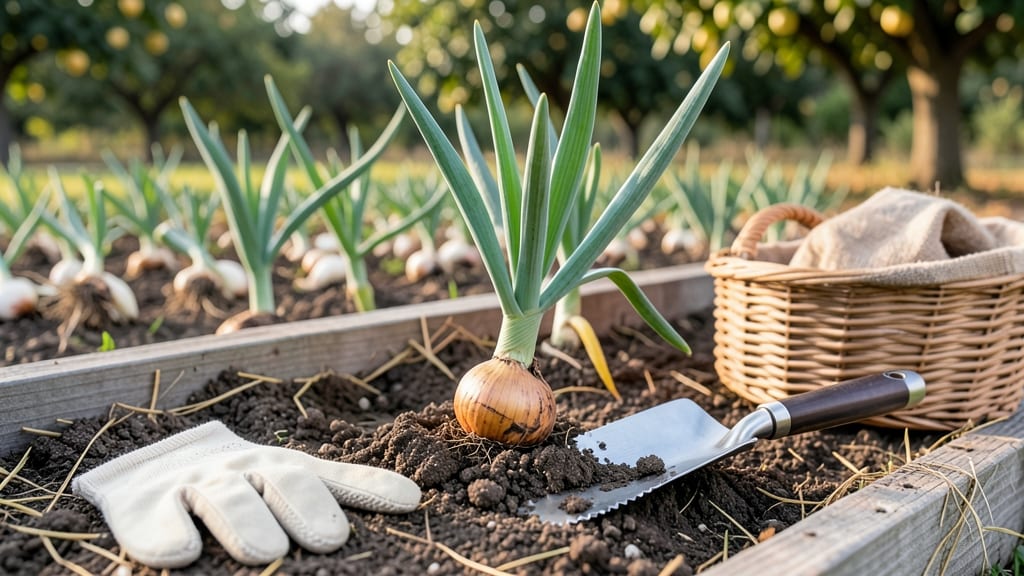
Harvesting onions at the right time means the difference between sweet, crisp bulbs and bitter, shriveled leftovers.
I’ve pulled onions too soon—ending up with puny, watery bulbs—and waited too long, only to find them splitting open in the soil. Three simple visual cues can save you from both mistakes, and once you know what to look for, you’ll never second-guess your timing again.
Start with the leaf color: when the tops turn a rich golden brown and flop over like a bow, that’s your first sign. Next, check the bulb size—it should be at least 1-2 inches wide—and finally, the neck, which tightens and dries out like parchment paper.
These clues work for most varieties in USDA Zone 6a and beyond, though late-summer heat can speed things up.
Below, I’ll walk you through how to spot each of these perfect-harvest signals, plus when to adjust for green onions or storage types. No more guesswork—just flavor-packed onions every time.

How to identify mature onions using 3 key visual cues
Harvesting onions at the right time ensures sweet, firm bulbs that store well. Premature onions taste sharp and won't keep, while overripe onions become pungent and soft. The secret lies in these three visual cues that signal perfect harvest timing: bulb size, neck thickness, and leaf color.
Mastering these will transform your onion harvest from guesswork to garden success.
First, let's address the most common question: how big should onions be when harvested? The ideal bulb diameter ranges from 1 to 2 inches. Smaller than 1 inch means they're still growing, while anything larger risks becoming tough and pithy.
I've found that yellow onion varieties often reach this size around 100-120 days after planting, while red onions mature slightly faster.
Here's where most gardeners go wrong: they focus only on bulb size. But the neck thickness is equally important. A mature onion's neck will feel tight and dry where it meets the bulb.
Run your thumb along this junction - if it gives slightly, the onion needs more time. This neck constriction prevents moisture loss during storage, which is crucial for long-term keeping.
Now for the most visible cue: leaf color changes. When about half the tops turn yellow-brown and flop over, that's your harvest signal. The remaining green leaves should still be healthy.
I've noticed that long-day onion varieties (like Texas Super Sweet) show this color change more dramatically than short-day varieties, which may just yellow without fully collapsing.
Let me show you exactly what to look for with this side-by-side comparison of premature vs. perfectly mature onions:
Pro tip: Early morning harvests work best because onions absorb less moisture from the soil. After pulling, let them cure in the sun for 2-3 hours to toughen the skins before storage. I've had great success with this method, especially for storage onions like Yellow Granex or Walla Walla varieties.
One mistake I see often is waiting until all leaves turn brown. By then, the bulbs may have split or become soft. The half-yellow rule gives you that perfect window.
For green onions (scallions), you'll harvest when the stems reach pencil thickness - but that's a topic for our next section!
Regional differences matter too. In hot climates, onions mature faster (sometimes in just 80 days), while cooler northern zones may need 120-150 days. Pay attention to your local first frost date - you typically want to harvest 4-6 weeks before frost to avoid winter damage.
Remember this golden rule: Harvest when the plant tells you. The onion's visual cues are nature's way of saying "I'm ready!" Ignoring these signals means missing out on peak flavor and storage potential.
With these three cues mastered, you'll enjoy homegrown onions that rival store-bought - and last through winter.
When to harvest green vs. storage onions: timing differences explained
Green onions (scallions) and storage onions have completely different harvest windows, yet many gardeners treat them the same. The key difference lies in their growth goals: green onions are harvested for their tender leaves and stems, while storage onions need fully developed bulbs for long-term keeping.
Understanding these timing differences will help you maximize your harvest's value.
For green onions, you can begin harvesting as early as 6-8 weeks after planting when the stems reach pencil thickness. Unlike storage onions, you don't need to wait for bulb development—simply snip the outer leaves, leaving the inner growth point intact.
This allows regrowth for multiple harvests throughout the season. I've found that bunching onions like Evergreen Hardy White are perfect for this continuous harvest method.
Storage onions, however, require patience. They need 100-150 days to mature fully, depending on the variety and climate. The timing shifts based on whether you're growing short-day (like Texas Early White) or long-day (like Yellow Sweet Spanish) varieties.
In USDA Zone 6a, most storage onions reach harvest readiness between late July and early September, while in warmer zones like Zone 9, they may mature as early as June.
One common mistake I see is treating all onions the same. For example, harvesting storage onions too early for their green stems results in small, pithy bulbs that won't store. Conversely, waiting too long for green onions to develop bulbs means missing out on their peak tenderness.
The solution? Plant both types in your garden: dedicate one bed to green onions for continuous harvests and another to storage varieties for winter supplies.
Seasonal timing also plays a crucial role. In spring-planted gardens, green onions can be harvested as early as May, while storage onions won't be ready until July or August. For fall planting, reverse this schedule: harvest green onions in September while storage onions mature by late October.
This staggered approach ensures you have fresh onions throughout the growing season without gaps.
Regional climate makes a big difference too. In arid Southwest climates, onions mature faster due to intense sunlight, while Pacific Northwest gardens may need an extra month. Always adjust your harvest timeline by 10-15 days based on your local average last frost date and summer temperatures.
For example, if your area has hot summers, expect storage onions to mature 2-3 weeks earlier than northern gardens.
Remember this key distinction: green onions are about continuous harvests, while storage onions demand full maturity. By planning your planting schedule around these differences, you'll enjoy fresh green onions all season while still building a winter storage supply of perfectly mature bulbs.
The secret to onion success lies in knowing exactly when to pull each type—and now you do!