
How To
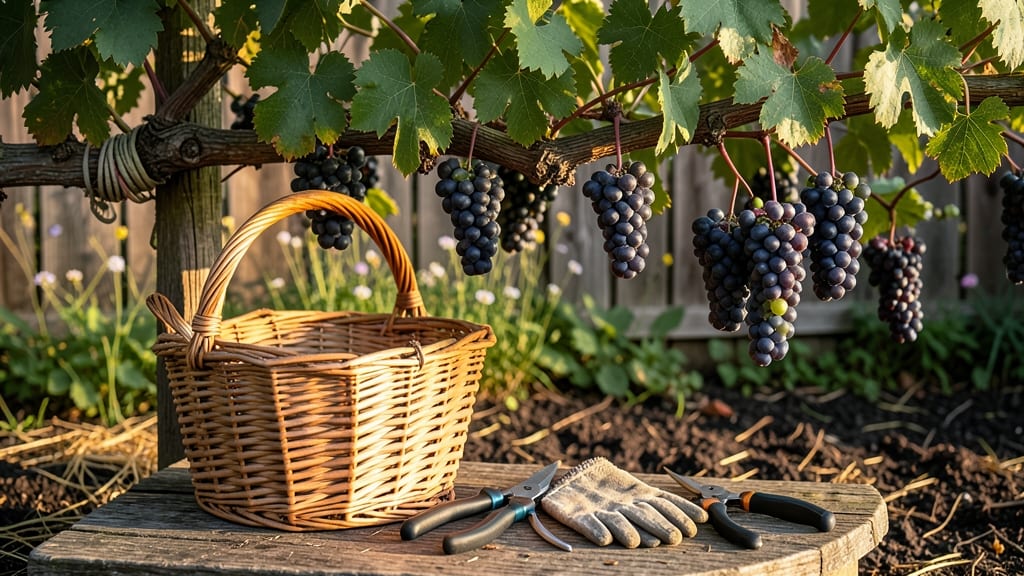
Harvesting Concord grapes at the right time means the difference between sweet, juicy clusters and tart, underripe fruit—or worse, mushy overripe messes.
If you’ve ever bitten into a grape that’s still green-tinged or left the vine too long and watched birds feast on your hard work, you know timing is everything. The good news? With a few simple checks—color, stem test, and sugar levels—you can nail that perfect window every year.
In Zone 6a, where these 🍇 Concord Grapes thrive, harvest typically falls between mid-August and September, but heat waves or cool spells can shift that timeline.
Below, I’ll walk you through the visual cues, hands-on tests, and even a quick sugar check to ensure you’re picking at peak flavor.
You’ll also learn how to adjust for regional differences, avoid common mistakes, and store your harvest so it stays fresh for weeks. No more guesswork—just delicious, homegrown grapes every season.

How to determine Concord grape ripeness by color, stem & sugar levels
Harvesting Concord grapes at their peak means balancing visual cues, physical tests, and sugar content. These dark purple gems transform from tart to sweet when ripe—missing the window means either underripe tartness or overripe mushiness.
Let’s break down the foolproof method I use every harvest season to guarantee flavor-packed grapes.
Start with the berry color, your first visual clue. Concord grapes begin green but deepen to deep purple or near-black as they ripen. A cluster with uniform dark color (no lingering green) signals readiness.
However, color alone isn’t enough—some grapes stay purple but never sweeten. That’s where the stem test and sugar levels come into play.
| Ripeness Indicator | Visual/Physical Sign | Sugar Level (Brix) | Action |
|---|---|---|---|
| Color Stage | Deep purple/black, no green | 18-22 Brix | Ideal harvest time |
| Stem Test | Stem snaps cleanly when bent | 18+ Brix | Ready to pick |
| Berry Firmness | Skin yields slightly to gentle pressure | 16-18 Brix | Near-ripe; monitor daily |
| Overripe Warning | Skin mushy, stem woody | 24+ Brix (fermenting) | Harvest immediately |
For precise ripeness, test the sugar content using a Brix refractometer. Concord grapes hit their sweet spot at 18-22 Brix—any lower, and they’ll taste tart; higher, and they risk fermenting.
I always test a few clusters from different vines to account for sun exposure variations. Early morning is best for testing since sugar levels drop slightly as temperatures rise.
Don’t overlook the stem separation test. Gently grasp a grape cluster and twist—if the stem snaps cleanly (not woody), it’s ripe. A stubborn stem means more time on the vine, while a mushy berry signals overripeness.
This test is my go-to for evening harvests when light conditions make color assessment tricky.
Regional differences matter too. In cooler climates (Zones 4-6), Concord grapes may take longer to ripen, so monitor sugar levels closely. In warmer zones (7+), they ripen faster—sometimes in as little as 100 days.
I’ve seen grapes in Southern California reach 20 Brix by early August, while my Zone 5 vines peak in late September.
Pro tip: Harvest in the morning when temperatures are cooler. Grapes lose moisture and sugar content as the day heats up, so early picking preserves flavor. Use sharp pruning shears to avoid crushing berries, and place them in shaded harvest baskets to prevent bruising.
If you’re unsure, taste-test a few grapes—but be cautious. Underripe grapes can be painfully tart, while overripe ones may ferment quickly. The perfect Concord grape should balance sweetness, tartness, and juicy texture. Once you’ve mastered these cues, you’ll never second-guess harvest time again.
After harvesting, store Concord grapes in the fridge for up to 2 weeks or freeze them for longer-term use. But the real reward? Knowing you’ve picked them at peak ripeness—when their flavor shines brightest.
5 Common mistakes that ruin Concord grape harvest timing (and how to avoid them)
Harvesting Concord grapes too early often leads to tart, underripe fruit that lacks the signature sweetness. Many gardeners pick based on color alone, but green-tinged grapes can still be firm and flavorless.
I’ve learned the hard way that waiting for the deep purple/black hue is just the first step—you also need to check for sugar development and stem readiness.
On the flip side, leaving grapes on the vine too long invites bird damage and overripe mushiness. I once watched a flock of blackbirds devour my entire harvest in one afternoon because I hesitated just a few days past the ideal window.
The key is balancing these factors while keeping an eye on weather forecasts that can accelerate ripening.
Here’s the critical mistake most gardeners make: ignoring the stem test. A grape might look ripe, but if the stem doesn’t separate cleanly when you gently twist it, it’s not ready. This simple check saves you from harvesting woody, underdeveloped fruit that’ll never taste right.
⚠️ WARNING: The #1 Harvest Timing Mistake
Harvesting based on calendar dates instead of actual ripeness. Zone 6a Concord grapes typically ripen in August-September, but heat waves can shift this by 2-3 weeks. Always check berry color, stem separation, and sugar levels—never assume!
Another common pitfall is harvesting in the heat of the day. Grapes exposed to midday sunoverheat and spoil faster. I now harvest early morning when temps are cooler, which also helps preserve flavor and texture for longer storage.
Regional differences matter too. In cooler climates, grapes may need extra time to ripen, while warmer zones can see faster maturation. I adjust my harvest schedule by tracking average daily temperatures—if it’s been consistently above 80°F for a week, I know the grapes are racing toward ripeness.
Finally, don’t skip post-harvest care. Even perfectly timed grapes can spoil if stored improperly. I’ve ruined entire harvests by leaving them in humid conditions or failing to cool them quickly. Store Concord grapes at 32-36°F and 85-90% humidity to extend freshness for 2-3 weeks.