
How To
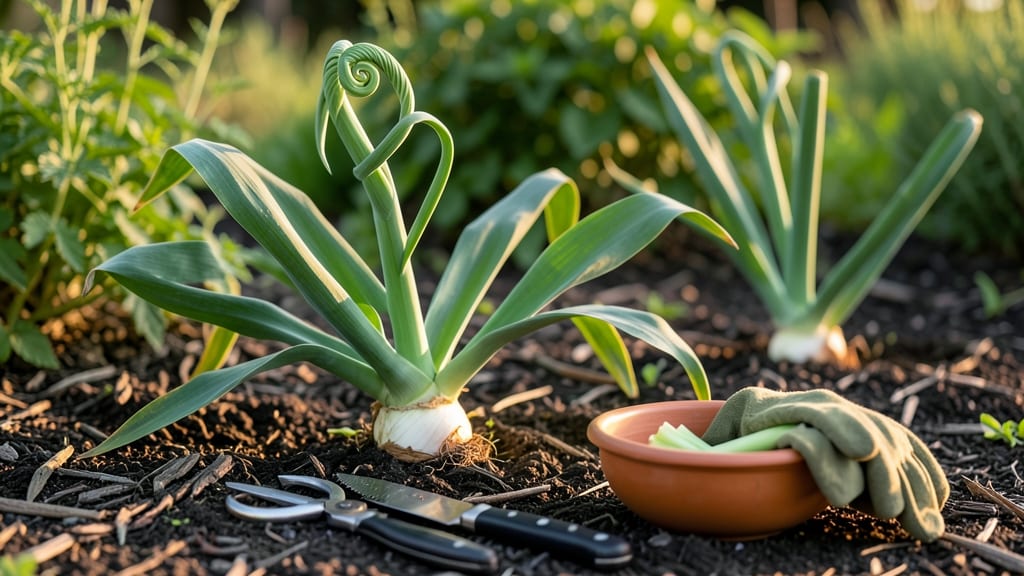
Harvesting garlic scapes when they form a loop 🧄—about 6 to 8 inches long—is the sweet spot for both flavor and future bulb growth.
You might think waiting longer means bigger scapes, but that’s a trade-off: delaying harvest weakens the plant and shrinks your garlic harvest next year. The key is acting fast once those curly stems appear, usually in late spring to early summer.
Below, I’ll walk you through the 3 foolproof signs your scapes are ready, how to snip them without harming the bulb, and what to do with your harvest to keep it fresh and delicious.
Whether you’re a first-time grower or a seasoned gardener, these simple cues will help you time it perfectly every season.

3 Clear signs your garlic scapes are ready for harvesting
Garlic scapes—those curly green stems that emerge from your garlic plants—are a gardener's secret weapon. Harvesting them at the right time not only gives you a flavorful ingredient for cooking but also ensures your garlic bulbs grow larger and stronger.
The key is knowing when those 6-8 inch stems are ready to pick, and it all comes down to three clear visual cues. Miss these signs, and you might end up with smaller bulbs or bitter-tasting scapes.
Timing matters because garlic scapes compete with the bulb for energy. When you harvest them at the perfect moment, you redirect that energy back into the bulb, resulting in bigger, more flavorful cloves next season.
Plus, scapes harvested too early are tender and mild, while those left too long become woody and tough. Let’s dive into the three foolproof signs that say: "It’s time to harvest!"
Scapes Form a Tight Loop
The most obvious sign is when the scape curls into a 6-8 inch loop. This happens naturally as the stem grows and starts to bend. If you see a perfect circle or spiral, that’s your cue to act fast.
The loop indicates the scape has reached peak tenderness and flavor, making it ideal for sautéing, pesto, or pickling.
Lower Leaves Begin Browning
Keep an eye on the lower leaves of your garlic plant. When they start turning yellow or brown at the base while the upper leaves remain green, it’s a sign the plant is redirecting energy toward bulb development.
This browning often coincides with the scape curling, confirming it’s harvest time. Ignore this sign, and you risk stunting bulb growth.
Bulb Skins Turn Dry and Papery
Gently lift a bulb to check its skin condition. If the outer layers feel dry and papery (not moist or glossy), your scapes are ready. This dryness signals the bulb is maturing, and harvesting the scapes now won’t disrupt its development.
Pro tip: Use a small trowel to peek under the soil—if the bulb feels firm and the skins are crisp, it’s time to harvest.
Regional variations can slightly shift harvest timing. In warmer climates (like USDA Zone 8+), scapes often curl earlier—sometimes as early as late May—while cooler zones (like Zone 5) may see them ready in July.
Always prioritize the visual cues over calendar dates, though. For example, if your scapes loop in June but your area is unusually cold, wait a few extra days to avoid stressing the plant.
Environmental factors also play a role. If your garlic plants are struggling with drought stress or nutrient deficiencies, the scapes might curl prematurely, but the bulb won’t be ready. In this case, wait until the bulb skins dry out before harvesting.
Conversely, if your plants are thriving with rich soil and consistent moisture, you can harvest scapes as soon as they loop—usually within 6-8 weeks after planting.
One common mistake is waiting too long after the scape loops. Once the loop opens into a wide, flat circle, the scape becomes woody and less flavorful. At this stage, the plant has already allocated significant energy to the scape, leaving less for the bulb.
To avoid this, harvest within 24-48 hours of the loop forming. Use clean, sharp pruning shears or a knife to cut the scape just above the bulb, leaving the rest of the plant intact.
Harvesting scapes at the right time isn’t just about flavor—it’s about encouraging future harvests. By redirecting energy to the bulb, you’re setting the stage for larger, more robust garlic next year.
Plus, scapes are incredibly versatile in the kitchen, adding a mild, oniony-garlic flavor to dishes. Think of them as nature’s way of giving you a double harvest in one growing season.
Pro tip: If you’re unsure whether your scapes are ready, perform the "finger test". Gently pinch the loop—if it snaps easily with a slight crunch, it’s harvest-ready. If it bends like a reed, wait a few more days.
This simple test saves you from harvesting too early or too late, ensuring both your scapes and bulbs reach their full potential.
Don’t let the fear of missing the perfect moment hold you back. Garlic scapes are forgiving, and even if you harvest a day early or late, you’ll still get edible stems.
But for the best results, trust the loop, leaves, and bulb skins—your garlic plants will thank you with bigger, healthier bulbs come harvest season.
Harvesting techniques: how to cut scapes without damaging garlic bulbs
Once your garlic scapes form that signature loop—around 6 to 8 inches long—it’s time to harvest. But timing matters beyond length. The right moment is when the loop tightens and the stem begins to harden slightly, usually in late spring to early summer.
This ensures both scape quality and bulb development.
Using the wrong tools or technique can stress the plant, reducing next year’s harvest. I always grab my sharp pruning shears or a clean knife to make precise cuts. The goal is to remove the scape cleanly without disturbing the bulb or surrounding leaves.
Start by locating the base of the scape, where it meets the main stem. This is typically about 1 to 2 inches above the bulb.
Avoid cutting too close to the bulb, as this can introduce disease. Instead, focus on the thickest part of the stem just below the loop.
⚠️ ⚠️ WARNING: Harvesting Too Late or Too Early ⚠️Hold the scape firmly with one hand and use your other hand to guide the shears or knife at a 45-degree angle. A clean cut prevents tearing and minimizes stress on the plant. If you’re unsure, practice on a few scapes first—precision matters more than speed here.
After cutting, don’t toss the scapes! They’re packed with flavor and nutrients. Immediately store them in a paper bag in the fridge for up to a week, or use them fresh in dishes like pesto, stir-fries, or roasted veggies.
The key is to act fast—the longer you wait, the more they lose their vibrant taste.
Once harvested, give your garlic plants a little extra care to compensate for the energy they just lost. Water deeply the day after harvesting and avoid fertilizing for at least 2 weeks. This helps the bulbs recover and grow stronger for your next harvest season.
With the right technique, you’ll enjoy bigger bulbs next year and a steady supply of fresh scapes. The secret? Pay attention to those loops, use sharp tools, and act quickly. Your garlic—and your taste buds—will thank you!