
How To
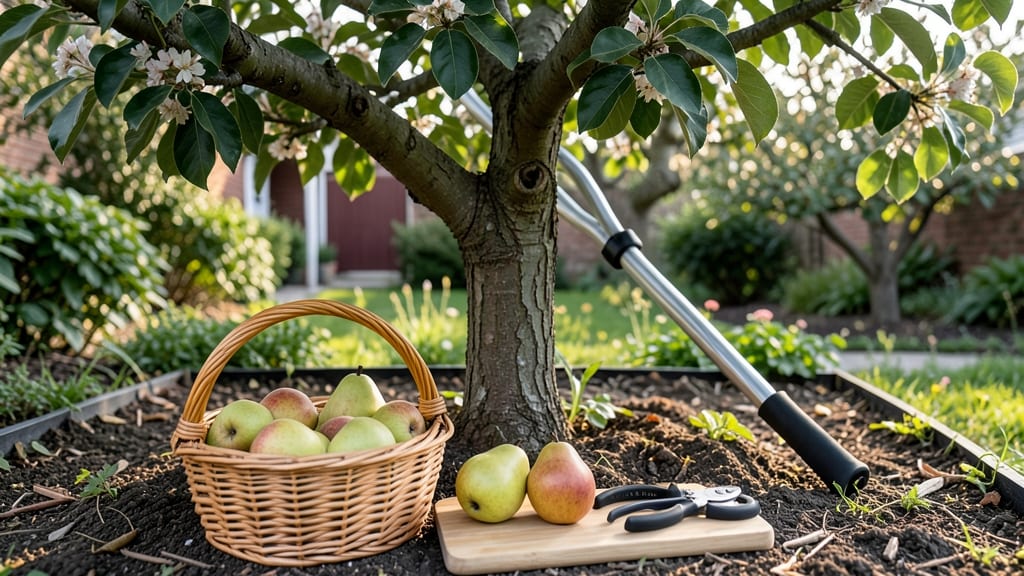
To pick Asian pears at their sweetest, time your harvest when they yield slightly to gentle pressure and their skin deepens to a rich golden or reddish hue 🍐 — the difference between tart disappointment and melt-in-your-mouth perfection.
Here’s the catch: Asian pears don’t soften like Western varieties. Too early, they’re mealy and underwhelming; too late, they turn mushy. The flex test—a light twist at the stem—reveals the exact moment they’re ready, usually September through October in most climates.
Why does this matter? Because a 3-day window separates peak ripeness from ruin. Miss it, and you’re left with fruit that’s either bland or overripe. Below, I’ll walk you through the telltale signs, seasonal adjustments, and how to store them to keep that harvest flavor for weeks.
Skip the guesswork: learn the 3 cues that guarantee sweetness every time, plus how to handle them once they’re off the tree.

How to test Asian pear ripeness using the flex method
Asian pears are notorious for their tricky ripening process. Unlike Western pears, they won’t soften noticeably on the tree, so you can’t rely on traditional ripeness cues. Instead, the flex test becomes your best tool—a simple, hands-on method to determine when these fruits are ready to pick.
This test focuses on stem flexibility and fruit firmness, two key indicators of peak sweetness.
The flex test works by gently twisting the pear at its stem while observing how much resistance it offers. A ripe Asian pear should yield slightly—not snap off but give just enough to signal maturity.
Pair this with visual cues like skin color changes and texture shifts, and you’ll nail the perfect harvest window every time.
Here’s the critical detail: timing matters. If you pick too early, the pears will taste tart and mealy, while waiting too long risks mushy, overripe fruit. The flex test bridges this gap, ensuring you harvest at the 3-day window of ideal ripeness.
Visual cues are just as important as the flex test. A ripe Asian pear’s skin will transition from light green to golden or reddish, depending on the variety.
For example, Hosui pears develop a bright yellow-green hue, while Niitaka pears turn a deeper reddish-brown. These color changes signal that the fruit’s sugars have fully developed.
Texture also plays a role. Run your fingers over the pear’s surface—ripe pears have a slightly rough texture due to natural wax buildup. Smooth skin often means the pear is still immature. Pair this with the flex test, and you’ll have a foolproof system for determining ripeness.
One common mistake is relying solely on the flex test without checking other cues. For instance, a pear might twist off easily but still feel too soft—this means it’s overripe. Always cross-reference the stem flexibility, skin color, and fruit firmness to avoid this pitfall.
Pro tip: Harvest Asian pears in the morning when temperatures are cooler. This reduces stress on the tree and helps preserve the fruit’s quality. Store them in a cool, dark place (like a basement) to extend their shelf life for up to 2 weeks.
Remember, Asian pears won’t ripen further after picking, so timing is everything. Master the flex test, and you’ll enjoy juicy, sweet pears every harvest season—no guesswork required.
Best time of year to harvest Asian pears by variety
Timing your Asian pear harvest depends heavily on the variety and your local climate. While most Asian pears ripen between late summer and fall, specific varieties like Hosui mature earlier than Niitaka or Shinko.
In temperate zones (USDA zones 6-8), the harvest window typically spans September through October, but tropical regions may see harvests as early as July.
Climate plays a huge role—cooler regions may need to wait until late October for full ripeness, while warmer areas might harvest as early as August. For example, Hosui pears often ripen first, followed by Niitaka and Shinko varieties.
Understanding these patterns ensures you don’t miss the 3-day sweetness window when flavors peak.
| Variety | Harvest Months (Temperate) | Harvest Months (Tropical) | Key Ripeness Cues |
|---|---|---|---|
| Hosui | Late August - Early September | July - Early August | Yellow-green skin, slight stem give |
| Niitaka | Mid-September - October | August - September | Reddish-brown skin, firm but yielding |
| Shinko | Late September - October | September - Early October | Golden-yellow skin, heavy for size |
For Hosui pears, watch for their signature bright yellow-green hue in late summer—this variety often ripens 2-3 weeks earlier than others. In tropical climates, Hosui pears may even be ready by early August, so frequent checks are essential.
Meanwhile, Niitaka and Shinko varieties typically mature later, aligning with fall harvests in cooler regions.
The flex test (covered in the previous section) is your best tool for verifying ripeness, but color changes also serve as reliable indicators. For example, Niitaka pears develop a deep reddish-brown tint when fully ripe, while Shinko varieties turn a golden-yellow.
These visual cues, combined with the flex test, help you pinpoint the exact moment to harvest for maximum sweetness.
Regional adjustments are key—if you live in a warmer microclimate, harvest Asian pears 1-2 weeks earlier than the general guidelines. Conversely, cooler high-altitude gardens may need to wait until late October.
Always monitor local weather patterns, as unexpected early frosts can force an earlier harvest before full ripeness is achieved.
Once harvested, store Asian pears in a cool (32-40°F), humid environment to preserve freshness for up to 2 weeks. Avoid refrigeration until fully ripe, as cold temperatures can dull their flavor. With the right timing, you’ll enjoy crisp, sweet pears straight from your tree—no compromises needed.