
Picking
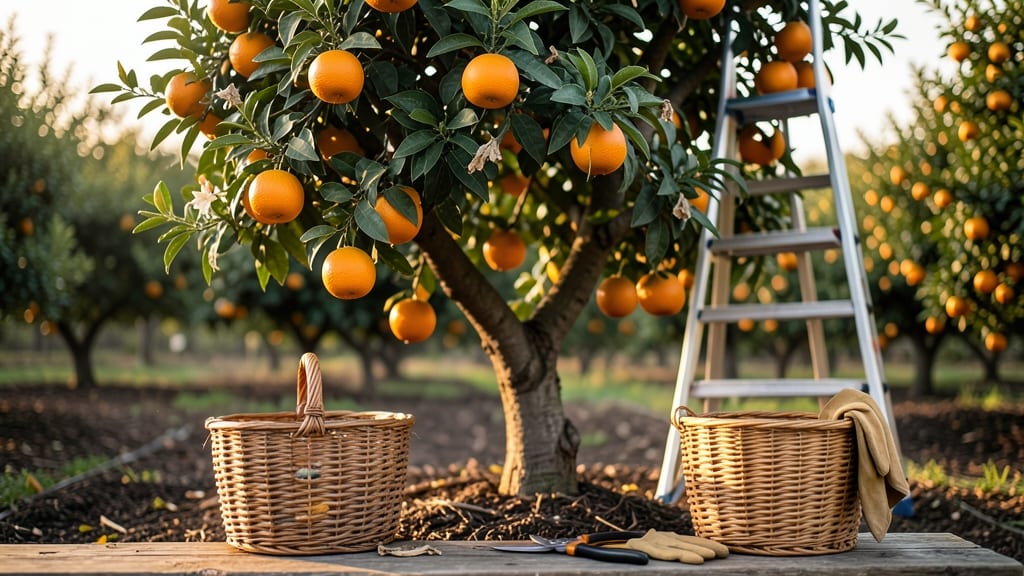
Picking oranges in California at the right time turns your tree into a year-round sweet treasure 🍊—but wait too long, and you’re left with mealy, flavorless fruit.
California’s golden oranges are a farmer’s dream—but timing your harvest wrong means bitter disappointment (literally). Knowing exactly when to pick each variety can mean the difference between juicy, sweet fruit and sour, underripe disappointment.
Navel oranges peak in winter, while Valencia varieties shine in spring, and coastal microclimates can shift those windows by weeks. Below, I break down the month-by-month calendar for each type, plus the simple tricks to test ripeness without a degree in horticulture.
You’ll learn how to spot the perfect orange—when it yields to gentle pressure, smells like sunshine, and releases easily from the branch—and how to avoid the common mistakes that turn your harvest into a waste.

California orange harvest calendar: best picking months by variety
California’s orange groves produce some of the sweetest fruit in the world—but only if you pick at the perfect moment. The Navel, Valencia, and Blood varieties each have distinct harvest windows, and even a few degrees of temperature or a coastal breeze can shift those timelines.
Whether you're a home gardener with a backyard tree or a small-scale farmer, knowing these month-by-month guidelines will ensure your oranges burst with flavor instead of bitterness.
Regional differences matter too. The Central Valley, home to 90% of U.S. citrus production, often harvests 2-4 weeks earlier than coastal areas like Santa Barbara or San Diego. Warmer inland microclimates accelerate ripening, while cooler coastal zones keep fruit hanging longer.
Below, I’ll break down the ideal harvest months for each variety, plus the tell-tale signs that guarantee sweet, juicy perfection.
🍊
Let’s start with Navel oranges, the crowd favorite that dominates California’s winter markets. These seedless wonders peak from November through February, but the Central Valley harvests them earliest—often as early as late October in warmer microclimates.
If you’re in Southern California, hold off until December or January for peak sweetness. The key? Wait until the fruit is deep orange all over (no green patches) and the stem slips easily when you give it a gentle twist.
For Valencia oranges, spring is your season—think March through May. These are the juiciest of the bunch, prized for their high sugar content and thick skins that resist bruising. Inland growers can start picking as early as mid-February, while coastal areas might wait until late March.
Look for fruit that’s bright orange and just slightly soft to the touch—like a ripe peach, not mushy. If you squeeze too hard and feel juice sacs pressing back, it’s not ready yet.
Don’t overlook Blood oranges, a heirloom variety with a deep red-purple hue and berry-like flavor. Their harvest window is short but sweet: December through January.
Inland areas like the San Joaquin Valley can pick as early as late November, while coastal Santa Barbara might extend the window into February. The trick with Bloods? Their thick, leathery skin stays green longer—wait until it’s uniformly red-orange and smells like raspberries and citrus combined.
🌡️
Temperature plays a huge role in ripening. A cold snap can stall sugar development, while warm days speed it up. If you’re in the Central Valley, watch for nighttime temps below 40°F—this can cause chilling injury and premature dropping.
Coastal growers have more flexibility, but avoid picking after rain, as wet fruit bruises easily and develops mold. Pro tip: Harvest on a dry, sunny morning when the fruit is cool but not damp.
One common mistake I see is picking based on color alone. A green-tinged orange might still be sweet if it’s a Valencia, while a fully orange Navel could taste bland if picked too early.
Always do the stem twist test: A ripe orange should separate cleanly from the branch with minimal force. If it’s still attached like glue, wait a few days. And if the peel resists when you gently press it? That’s a sign it’s overripe and past its prime.
🪴
For home gardeners with dwarf or semi-dwarf trees, these timelines still apply—but pay extra attention to tree size and age. Younger trees (under 5 years old) produce smaller yields, so don’t expect a bountiful harvest until they mature.
If your tree is container-grown, it may ripen 1-2 weeks later than ground-planted trees due to root stress. Always water deeply the day before picking to plump up the fruit and reduce bitterness.
Finally, store your freshly picked oranges properly to lock in flavor. Keep them at room temperature for
How to tell when oranges are perfectly ripe (not too early, not too late)
Picking oranges at the wrong time ruins their flavor—too early means tart, underdeveloped fruit, while waiting too long turns them mealy and dry. Color alone isn’t enough—you need to test for texture, scent, and stem detachment to nail the perfect harvest window.
California’s Navel oranges and Valencia varieties each have unique ripening cues, but these universal tricks work for all citrus.
Start by examining the peel texture. A ripe orange’s skin should feel slightly leathery but not hard—press gently with your thumb. If it springs back immediately, it’s not ready.
Look for juice sacs visible through the peel; they should appear as tiny, translucent dots. This indicates peak sweetness and juice content, a hallmark of California-grown oranges at their best.
Next, give the fruit a gentle twist near the stem. It should detach easily—if it resists, it’s not ripe. A ripe orange also releases a sweet, citrusy aroma when you sniff near the tree.
This scent is your best indicator of flavor development, especially in cooler coastal regions where ripening slows.
⚠️ callout warning ⚠️
⚠️ Avoid These Ripeness Mistakes!
- Picking after rain—wet fruit absorbs water, diluting flavor and increasing rot risk.
- Ignoring temperature cues—cooler inland valleys ripen later than coastal areas by 2-3 weeks.
- Overlooking stem detachment—if the fruit tears instead of twisting off, it’s not ready.
- Storing unripe oranges—they won’t ripen off the tree; wait until perfect before harvesting.
🌱 Pro Tip: Harvest in the morning when temperatures are cooler to preserve freshness.
Temperature plays a surprising role in ripeness. Valencia oranges sweeten more in warmer coastal climates, while Navel varieties in inland valleys need cooler nights to develop full sugar content. If your oranges taste bland, check the average nighttime temperature—below 50°F can stall ripening.
In Southern California, this means harvesting earlier in winter than in the Central Valley.
For a final check, cut into the orange (yes, really!). The juice sacs should be plump and filled with bright liquid, not dry or collapsed. If the flesh is pale or watery, it’s underripe.
Overripe oranges have darker juice sacs and a fermented scent—a clear sign you’ve waited too long. This test is brutal but 100% accurate for determining peak flavor.
Once you’ve mastered these tests, you’ll never guess at ripeness again. Timing your harvest this way ensures every orange you pick is bursting with California sunshine, sweetness, and that perfect citrus tang.
Now grab your harvesting tools and enjoy the rewards of your labor—juicy, perfect oranges that taste like summer all year round. 🍊