
How To
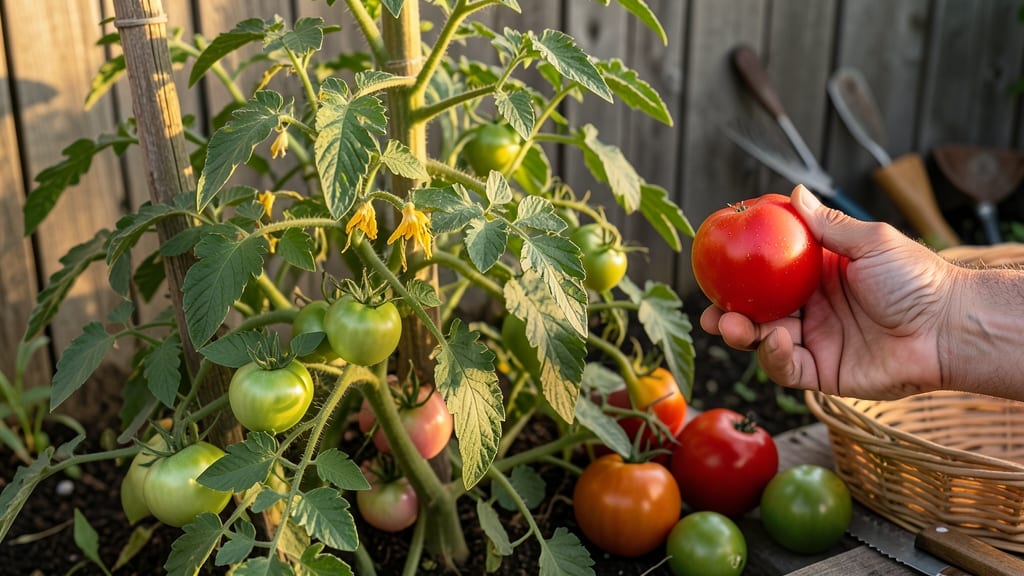
Picking tomatoes at the right time means the difference between a burst of juicy sweetness and a meal of mealy, bland disappointment — and the secret is all in the stem twist angle.
Ever wondered why your homegrown 🍅 tomatoes taste bland—or why some burst with sweetness while others stay hard as rocks? The answer lies in mastering the perfect ripening signs before harvest, not just guessing by color. A simple twist test can tell you exactly when to pick for peak flavor.
Most gardeners wait until tomatoes turn deep red, but that’s only half the story. Texture, scent, and even the way the fruit pulls from the vine all play a role in determining the ideal harvest window.
Miss it, and you’ll either end up with underripe green shoulders or overripe mush.
In this guide, I’ll walk you through the stem twist method, color cues by variety, and common mistakes that ruin harvests—so you can enjoy tomatoes that taste like summer all season long.


How to use the stem twist test for perfect tomato ripeness
Picking tomatoes at the right moment transforms your garden harvest from meh to mind-blowing. The stem twist test is my go-to trick for determining peak ripeness—no guesswork required.
This simple method helps you avoid underripe (hard, bland) and overripe (mealy, split) tomatoes by checking the stem separation angle and fruit firmness. When done right, you’ll maximize sugar content and flavor intensity while keeping your plants productive.
The stem twist test works because tomatoes naturally detach easily from the vine when they’re perfectly ripe. The calyx (stem end) changes color from green to yellow/brown, and the fruit’s cell structure softens just enough to pull away smoothly.
Mastering this technique ensures you harvest at the sweetest stage, whether you’re growing heirloom or hybrid varieties. Let’s break it down step by step so you never miss the window again.
-
Step 1: Choose Your Tomato
Pick a tomato that’s fully colored (varies by variety—red, yellow, or purple). Avoid green shoulders or uneven hues. -
Step 2: Gently Grasp the Stem
Hold the tomato firmly with one hand and the stem (calyx) with the other. Use a light grip—no squeezing! -
Step 3: Twist Slowly
Rotate the tomato 180 degrees while keeping the stem in place. Watch for resistance or ease of separation. -
Step 4: Check the Angle
If the stem snaps cleanly at a 45-degree angle, it’s ripe! A straight pull means it’s underripe; a messy tear signals overripeness. -
Step 5: Verify Firmness
Press the tomato gently—it should yield slightly but not feel mushy. A hard surface means it needs more time on the vine.
Timing is everything when it comes to the stem twist test. If you harvest too early, your tomatoes will lack sweetness and aroma, tasting more like watery paste. On the flip side, waiting too long risks cracking, rotting, or attracting pests like fruit flies.
The twist test gives you a 5-second check to confirm ripeness without damaging the plant. For cherry tomatoes, the angle might be slightly sharper (closer to 90 degrees), while beefsteak varieties often pull away at a gentler curve.
Color alone isn’t enough to judge ripeness—especially in green-shouldered varieties like Brandywine or Sungold. Some tomatoes (like Black Krim) ripen to deep purple or black, while others (like Yellow Pear) stay golden.
That’s why the stem twist test is a game-changer: it accounts for internal ripening, not just external color. Pair this method with a gentle squeeze test—ripe tomatoes should feel firm but slightly yielding, like a ripe avocado.
Environmental factors can throw off your stem twist timing. Hot, dry weather speeds up ripening, so you might need to harvest 1-2 days earlier than usual. Conversely, cool or cloudy conditions slow the process, and tomatoes may stay firm longer.
If you’re growing in a greenhouse or container garden, monitor the stem twist daily during peak season (typically July–September in most climates). Keep a harvest journal to track when your specific varieties reach perfect twist angles.
One common mistake is assuming all tomatoes ripen at the same rate. Heirloom varieties often take 10–14 days longer to reach the ideal twist angle compared to hybrids.
For example, a San Marzano might pull away smoothly at 80 days, while a Celebrity tomato could be ready in 70 days. If you’re unsure, use the float test as a backup: Drop the tomato in a bowl of water.
A ripe tomato will float with the stem end up; an unripe one will sink.
For container-grown tomatoes, the stem twist test is even more critical because limited root space can stress the plant. Overcrowded pots or underwatering can cause uneven ripening, making the twist test your best friend.
Always harvest with a sharp pruner or scissors to avoid tearing the stem—this prevents disease entry points and keeps the plant healthy for future fruit. After harvesting, let your tomatoes ripen at room temperature for 2–3 days to develop full flavor before storing.
Why does the stem twist angle matter so much? It’s all about ethylene gas, the natural ripening hormone in tomatoes. As ethylene builds, the pectin in the stem softens, making separation easier. The 45-degree angle indicates the perfect balance of sugar, acidity, and texture.
Harvest at this stage, and you’ll get tomatoes that burst with flavor and stay fresh longer off the vine. Skip this step, and you’ll end up with mealy, seedy tomatoes that taste like they’ve been sitting in a pantry for weeks.
Pro tip: If you’re growing multiple tomato varieties, label your plants and track their individual ripening timelines. Some varieties (like Early Girl) are early producers, while others (like Cherokee Purple) take longer to reach the ideal twist angle.
By mastering the stem twist test, you’ll extend your harvest season, reduce waste, and enjoy tomatoes that taste like summer in every bite. Happy harvesting!
Tomato ripening stages: color, texture & flavor clues by variety
Not all tomatoes ripen the same way—heirloom and hybrid varieties have distinct color cues and texture changes that signal peak ripeness. A deep red heirloom like Brandywine might be ready when its skin blushes pink, while a yellow pear like Solar Fire waits for golden hues.
Ignoring these differences can mean harvesting too early or too late, both of which ruin flavor.
Texture is your best friend when picking. A ripe tomato should yield slightly to gentle pressure—like pressing your thumb into a ripe peach—but still hold its shape.
Overripe tomatoes turn mushy, while underripe ones stay rock-hard. Scent tests work too: hold a tomato to your nose—ripe ones emit a sweet, tangy aroma, while unripe ones smell bland or grassy.
Here’s how to spot ripeness by variety, including red, yellow, green, and purple tomatoes, plus when to harvest for fresh eating vs. storage:
| Variety Type | Color Clue | Texture Test | Harvest Time | Best For |
|---|---|---|---|---|
| Heirloom Red (e.g., Brandywine) | Deep pink-red blush | Yields slightly to thumb | Morning (cooler temps) | Fresh eating |
| Hybrid Red (e.g., Celebrity) | Uniform bright red | Firm but not hard | Anytime (store at room temp) | Storage (1-2 weeks) |
| Yellow (e.g., Solar Fire) | Golden, no green shoulders | Softens near stem | Late afternoon (warmer) | Sauces/salsas |
| Green (e.g., Green Zebra) | Striped, no green stem | Firm but aromatic | Pick when fully striped | Pickling |
| Purple (e.g., Black Krim) | Deep purple-black | Slightly wrinkled skin | Early morning (cool) | Roasting |
For heirloom tomatoes, flavor peaks when the stem twist angle is at 45 degrees—meaning the fruit detaches cleanly with a slight tug.
Hybrid varieties often ripen more uniformly, so focus on color consistency across the fruit. Yellow and orange tomatoes, like Sun Gold, ripen faster in heat and should be picked when they’re fully colored but still firm.
If you’re storing tomatoes, harvest hybrids slightly firmer than heirlooms—they’ll ripen off the vine. Place them in a paper bag with a banana to speed up ripening (the ethylene gas works wonders!). For heirlooms, eat them fresh within 3-5 days—their complex flavors fade fast once picked.
Pro tip: Purple and black tomatoes (like Cherokee Purple) often ripen unevenly. Check for wrinkled skin near the stem—this signals peak sweetness. And if your tomatoes taste bland? You might’ve picked them too early. Next time, wait until the stem snaps when twisted, not just pulls.