
How To
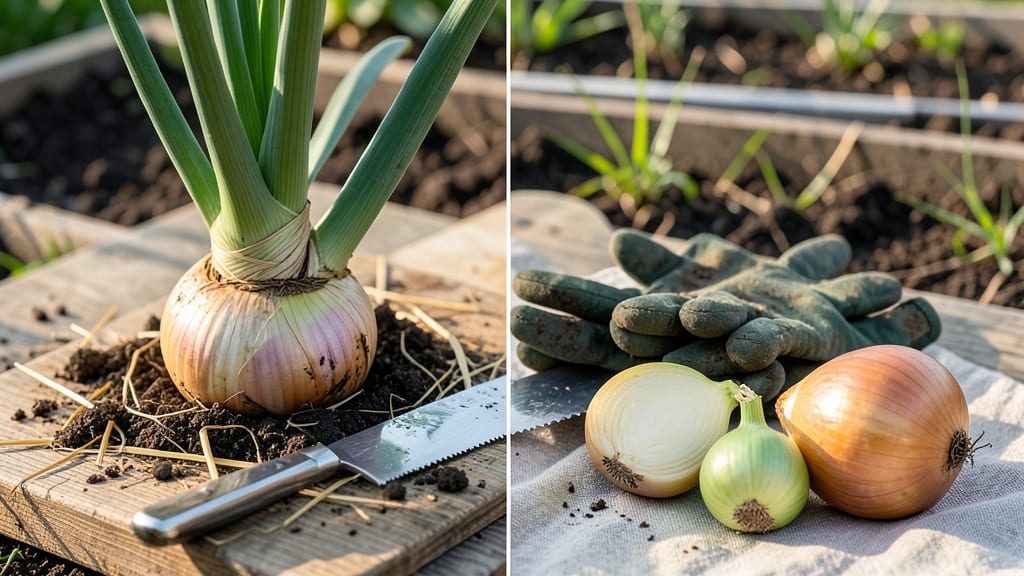
Telling when to harvest onions is all about watching for three key signs: yellowing tops, dry papery skins, and bulbs that feel firm to the touch.
Harvesting onions at the wrong time means sacrificing flavor, texture, and even storage potential—so knowing exactly when to pull them is a gardener’s secret weapon. One year, I waited too long, and my 🧅 sweet onions sprouted and turned bitter, a lesson I’ll never forget.
For spring-planted onions in USDA Zone 6a, the harvest window opens in late June, but timing depends on your variety. Green onions can be snipped anytime, while storage onions need that perfect balance of maturity and dryness.
Below, I’ll walk you through the unmistakable signs of readiness, how to handle them at harvest, and the best ways to store them so they last all winter.

3 Visual signs your onions are ready for harvest (with photos)
Knowing exactly when to harvest your onions can make the difference between sweet, flavorful bulbs and tough, pungent ones. Miss the window, and you risk losing storage potential or dealing with hollow centers.
The good news? Onions send clear visual signals when they're ready—you just need to know what to look for. Here's how to spot them in your garden.
First, let's address the most common mistake: waiting too long. Many gardeners pull onions when the tops are still green, but that's often too early. True harvest readiness happens when the plant shifts its energy from leaf growth to bulb development.
This transition creates three unmistakable visual cues that I've learned to watch for over years of growing my own onions.
Look for 50-70% of tops turning yellow and flopping over. This signals the plant is redirecting energy to the bulb. Green tops mean more growing time needed.
The stem between bulb and leaves should shrink noticeably, and the bulb's outer skin will become dry and papery. Press gently—if it feels firm, it's ready.
Dig up one onion to check size. Storage onions should be 2+ inches wide with thick necks. Green onions harvest earlier at pencil-thin size.
Let me share a personal tip: I always test one onion by gently pulling it up to check the bulb size.
If it slides out easily with a firm, dry bulb, your whole patch is likely ready. Resist the urge to harvest based solely on leaf color—some varieties like Yellow Granex stay green longer but develop sweet bulbs when properly sized.
The leaf browning sign is particularly important for short-day onions planted in fall. These varieties often mature in early spring when days are still cool. I've seen gardeners in Zone 6 harvest as early as March, while others in warmer zones wait until May.
Always check your specific variety's days-to-maturity for best results.
Here's where many gardeners get confused: green onions and storage onions have different harvest windows. Green onions (scallions) are ready when they reach pencil thickness (about ½ inch diameter) and have 6-8 inches of leaf growth.
Storage onions, however, need that full maturation process with all three visual signs before harvesting for long-term storage.
One trick I've used successfully is to mark test plants when you notice the first signs of browning. This gives you a clear reference point for the rest of your onion patch.
Place small flags or tie colored twine around the stems of these test plants. By the time they're fully ready, you'll know exactly when to harvest the entire bed.
Don't overlook the importance of weather conditions during harvest time. Ideal harvest weather includes dry, sunny days with temperatures between 60-75°F. If rain is forecasted, harvest a few days early to prevent rot.
I always aim to harvest onions 2-3 days before rain when possible, giving them time to dry properly before storage.
For spring-planted onions, watch for these signs between June and August depending on your climate. Fall-planted onions will show readiness the following spring, typically 30-60 days after flowering (when the seed stalk appears).
Remember that flowering indicates maturity, so don't be surprised if you see seed stalks—this is normal and doesn't mean your onions are past their prime.
Pro tip: If you're unsure whether your onions are ready, perform the "neck squeeze test". Gently grasp the stem above the bulb—if it feels dry and papery rather than crisp, your onions are harvest-ready.
This simple test has saved me from harvesting too early many times, especially with storage varieties like Yellow Sweet Spanish or Texas Early White.
Once you've confirmed all three visual signs, it's time to harvest. Use a garden fork to gently loosen the soil around the onions, then grasp the base and pull upward. Never cut the tops before curing—they help draw moisture out of the bulb during the drying process.
Leave 1-2 inches of stem attached for best results.
When to harvest green onions vs. storage onions (timing matters)
Harvesting onions isn't one-size-fits-all—your decision to pull them for fresh use or long-term storage depends on variety, weather patterns, and soil conditions. Green onions (scallions) can be harvested multiple times, while storage onions need precise timing to develop their signature sweetness and shelf life.
Last summer, I learned this the hard way when my storage onions bolted in the heat, leaving me with bitter, unusable bulbs.
For green onions, you can snip the outer leaves anytime they reach 6-8 inches tall, allowing the plant to regrow. However, storage onions require patience—they need 60-120 days of growth to mature fully, depending on the variety.
The key difference lies in their leaf color, bulb size, and neck thickness, which I’ll break down in the comparison below.
| Factor | Green Onions | Storage Onions |
|---|---|---|
| Harvest Time | Multiple harvests every 2-3 weeks | Single harvest after 90-120 days |
| Leaf Color | Green tops remain upright | Yellow/brown tops fall over |
| Bulb Size | Thin stems, no bulb | 1-2 inch diameter bulbs |
| Neck Thickness | No neck shrinkage | Shrunken neck, papery skin |
| Soil Conditions | Moist but not soggy | Dry soil for 2 weeks before harvest |
| Best Time of Day | Morning (freshest) | Dry, sunny afternoon |
Environmental factors play a huge role in harvest timing. Storage onions thrive in cool temperatures (60-70°F) and struggle when daytime temps exceed 80°F. If your onions are maturing during a heatwave, harvest them early—they’ll still store well if cured properly.
I’ve found that fall-planted onions in Zone 6a often mature faster in the cooler spring, while spring-planted varieties need the full summer to bulk up.
Another critical factor is soil moisture. For storage onions, stop watering 2 weeks before harvest to allow the bulbs to dry out and develop their protective papery skins. Overwatering at this stage leads to soft, rot-prone onions.
Meanwhile, green onions prefer consistent moisture—they’ll bolt (flower) if the soil dries out completely. My 🧅 red scallions once bolted mid-July because I forgot to water during a heatwave, teaching me the importance of vigilance.
Pro tip: If you’re unsure whether your onions are ready, dig up one bulb to check. A mature storage onion will have a firm, dry bulb with a shrunken neck, while an immature one will feel soft and green.
For green onions, simply snip the outer leaves 1 inch above the soil—the plant will keep producing as long as it’s healthy. Timing these harvests correctly ensures you’ll have fresh onions all season long, whether you’re using them in salads or storing them for winter soups.