
How To
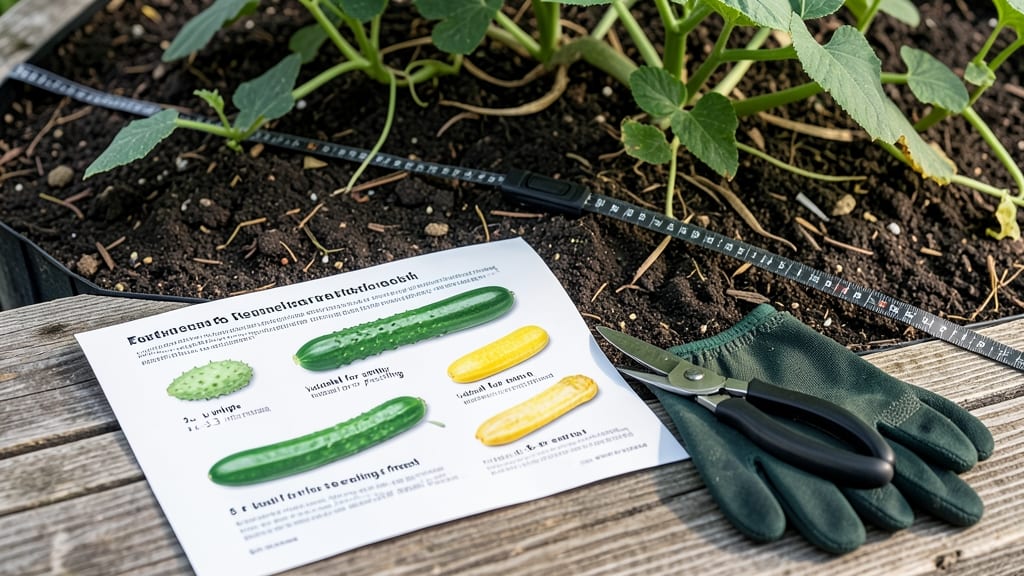
Picking cucumbers at the right ripeness means the difference between crunchy, sweet bites and bitter, seedy disappointments 🥒 — and a chart makes it foolproof.
If you’ve ever pulled a cucumber off the vine only to find it too hard or mealy, you know how frustrating it can be.
The key is watching for three things: vine color shifts, seed development, and size cues that tell you exactly when to harvest for peak flavor—or hold off for storage.
This cucumber ripeness chart simplifies the process by breaking down what to look for, whether you’re growing slicing types, pickling cucumbers, or specialty varieties. No more guessing whether that 6-inch cucumber is ready or still needs time on the vine.
Below, I’ll walk you through the visual clues—from stem color to seed stage—and share pro tips to adjust growing conditions so your cucumbers ripen just right, every time.
Cucumber ripeness chart: vine color, seed color, and size by variety
Understanding when to harvest cucumbers depends on the variety you’re growing. Slicing cucumbers like Marketmore need one set of cues, while pickling types like Boston Pickling require a different approach. Even specialty varieties—such as Persian cucumbers or English hothouse cucumbers—have unique ripeness markers.
Below, I’ll break down the key indicators: vine color, seed development, and size ranges for each type.
Most gardeners focus on size and color, but the stem end and seed stage are equally important. For example, a yellowing stem end signals ripeness in slicing cucumbers, while pickling cucumbers should be harvested when seeds are still tiny and white.
Missing these cues can lead to bitter, seedy, or overly soft cucumbers—so let’s dive into the details.
For slicing cucumbers, the stem end turning yellow-brown is a clear signal that the cucumber is ripe but not overripe. This typically aligns with seeds that are small and pale yellow, ensuring a crisp texture and mild flavor.
If you wait too long, the seeds darken and the cucumber becomes seedy and bitter—a common mistake among new gardeners.
Pickling cucumbers, on the other hand, should be harvested when they’re 2–4 inches long and seeds are still white and tiny. The stem end remains green, and the skin is bright and firm.
Overripe pickling cucumbers develop larger seeds and a softer texture, making them unsuitable for pickling. Always harvest these small and firm for the best crunch and tang.
Specialty varieties like Persian cucumbers are best picked when they’re 4–6 inches long and seeds are not yet visible. Their smooth, blemish-free skin is a hallmark of quality, so avoid letting them grow too large.
For English hothouse cucumbers, aim for 8–12 inches with seeds that are white to pale yellow—these are bred for tender, seedless flesh, so timing is critical.
One pro tip I’ve learned is to harvest early in the morning when cucumbers are cool
How to test cucumber ripeness beyond the chart: tactile and taste tips
Even with a cucumber ripeness chart in hand, some fruits slip through the cracks—either too hard or past their prime. That’s why I always double-check ripeness using my tactile and taste tests.
These methods let you confirm what your eyes might miss, especially when dealing with heirloom varieties or less common types.
The first trick is the stem separation test. Gently twist the cucumber at its stem end—if it snaps cleanly with a slight resistance, it’s ready. A stubborn stem means it’s underripe, while a stem that pulls away too easily signals overripeness.
This works best on 6-8 inch cucumbers, the ideal size for most slicing varieties.
⚠️ callout warning
Overripe cucumbers (yellowing skin, soft spots) can ruin salads but are perfect for pickling. Underripe ones (hard, pale) lack flavor and may never soften. Check seed color—white or pale seeds mean harvest now, while dark seeds signal overripeness.
Next, try the thump test. Hold the cucumber in one hand and tap it lightly with your other fingers—like knocking on a door. A ripe cucumber produces a hollow, crisp sound, while an underripe one thuds dull and flat.
This trick works best on firm-skinned varieties like Marketmore or Straight Eight.
For flavor confirmation, cut one open (yes, sacrifice a test cucumber!). A ripe cucumber has tender flesh with a mild, slightly sweet taste. Overripe ones taste bitter or mealy, while underripe ones are bland and fibrous.
If the seeds are white or pale yellow, harvest immediately—dark seeds mean it’s past its peak.
Don’t ignore the vine’s signals. Healthy vines produce cucumbers every 3-5 days during peak season. If you’re seeing fewer fruits or yellowing leaves, your plant may be stressed—either from overwatering or nutrient deficiencies. Adjust your care routine to keep the vine productive.
Pro tip: Harvest in the morning when cucumbers are cool and crisp. This reduces bruising and gives you the most accurate read on ripeness. And if you’re growing pickling cucumbers, aim for 3-4 inch sizes—they’re firmer and less seedy at this stage.