
How To
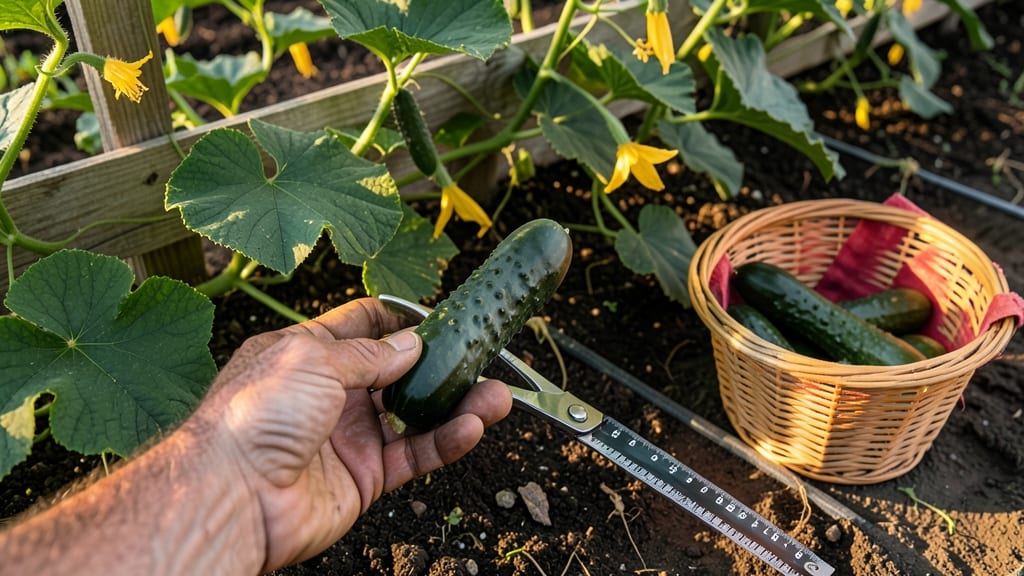
To pick Boston pickling cucumbers 🥒 at the perfect moment means harvesting them when they’re 2-4 inches long and still firm, before seeds develop.
Picking too early gives you tiny, underripe cucumbers, but waiting too long means seedy, bitter pickles that ruin your batch. The secret? A simple stem twist test and knowing the ideal harvest window—usually 55 days after planting.
In this guide, I’ll walk you through the exact signs to look for—like skin firmness, color, and stem angle—and how to time your harvests for the best flavor and yield.
You’ll also learn how often to pick to keep your plants producing and why harvesting in the morning makes all the difference.

The stem twist test: how to spot perfect pickling cucumbers
Mastering the stem twist test is the secret to harvesting Boston pickling cucumbers at their peak. When you gently twist the cucumber at the stem, it should separate with a 30-45° angle—this is your perfect ripeness indicator.
This method ensures you catch them before seeds develop, which is critical for crisp, flavorful pickles.
I’ve learned from experience that ignoring this test leads to oversized cucumbers with bitter flavors and large seeds. The 2-4 inch size range is ideal, but the twist test adds precision beyond just measuring length. It’s a simple trick that saves you from ruined batches of pickles.
The stem twist angle works because it reveals the cucumber’s internal maturity. A sharp twist (less than 30°) means it’s underripe, while a clean break (over 45°) signals overmaturity. This method is especially useful when you’re harvesting multiple cucumbers daily and need a quick way to assess ripeness.
Visual cues like vibrant green color and firm skin support the twist test. However, color can vary slightly based on sunlight exposure, so always combine visual checks with the twist method.
For example, cucumbers grown in partial shade might appear paler but still be perfect if they pass the twist test.
| Ripeness Indicator | Specification | Action |
|---|---|---|
| Stem Twist Angle | 30-45° separation | Harvest immediately |
| Cucumber Size | 2-4 inches long | Use for pickling |
| Skin Texture | Firm but not hard | Ideal for slicing |
| Color | Deep, consistent green | Avoid pale or yellowing |
| Stem End | Slightly yellowing | Sign of maturity |
Beyond the twist test, pay attention to the stem end of the cucumber. A slight yellowing at the base is another sign of readiness. This is often overlooked, but it’s a reliable indicator that the cucumber has reached its ideal maturity for pickling.
I’ve noticed that cucumbers with fully green stems tend to be slightly underripe.
Harvesting in the morning is another pro tip I swear by. Cucumbers picked early in the day are cooler and firmer, making them perfect for pickling.
The twist test works best in the morning because the cucumbers haven’t been exposed to the heat of the day, which can make them slightly softer and harder to assess accurately.
If you’re growing Boston pickling cucumbers in containers, the twist test becomes even more critical. Container-grown plants often produce cucumbers faster, and missing the harvest window can lead to overcrowding and reduced yield. I’ve found that checking plants every 2-3 days ensures I don’t miss the perfect moment to harvest.
One common mistake is waiting until cucumbers reach their maximum size, thinking they’ll be better for pickling. But larger cucumbers develop bitter compounds and larger seeds, which ruin the texture of your pickles.
The twist test helps you avoid this pitfall by giving you a clear, actionable cue to harvest at the right time.
For continuous production, I recommend harvesting every 2-3 days during peak season. This frequency keeps the plants focused on producing new cucumbers rather than letting old ones overmature. It also ensures a steady supply of perfect-sized cucumbers for pickling throughout the growing season.
Finally, always use a sharp pair of pruning shears or scissors to harvest cucumbers. Twisting them off by hand can damage the plant and make it more susceptible to disease.
This small detail makes a big difference in the health and productivity of your Boston pickling cucumber plants over time. 🥒
Seed maturity checklist: how to avoid bitter or seedy cucumbers
Once you’ve mastered the stem twist test, the next step is checking for internal seed development—the real culprit behind bitter, seedy cucumbers. Even cucumbers that pass the twist test can hide developing seeds if you’re not careful.
I’ve found that running your thumb along the cucumber’s length is the quickest way to detect early seed formation. If you feel even the slightest bump or ridge, it’s time to harvest before those seeds grow.
Seed development starts around 55-60 days after planting, which aligns with the ideal harvest window for Boston pickling cucumbers. However, environmental factors like temperature and sunlight can accelerate this process. For example, hotter summers may cause seeds to develop faster, while cooler weather can delay it.
Always check cucumbers every 2 days during peak production to catch them before seeds form.
Early Harvest (2-3 inches) vs. Late Harvest (4+ inches)
Early Harvest
- Pros: Crisp texture, no seeds, ideal for pickling
- Cons: Smaller yield per cucumber, may require more frequent harvesting
Late Harvest
- Pros: Larger cucumbers, easier to spot
- Cons: Bitter taste, large seeds, poor texture for pickling
💡 Key Tip: Harvest at 3-4 inches for the best balance of size and seed development.
Another telltale sign of overmaturity is a yellowing or softening near the blossom end of the cucumber. This area often changes color first as the cucumber ages. If you notice yellowing or a slight give when you press gently, it’s a clear sign the cucumber is past its prime.
I’ve also noticed that cucumbers left on the vine too long develop a waxy or dull finish—a far cry from the glossy, vibrant green of perfectly ripe pickling cucumbers.
For container growers, seed development happens even faster due to the concentrated growth environment. I recommend checking container-grown cucumbers daily during peak production to avoid missing the harvest window. The smaller root system can’t support the same level of water and nutrient uptake, so cucumbers mature quicker.
This makes the twist test and seed check even more critical for container gardens.
If you’re unsure whether a cucumber is ready, err on the side of harvesting it early. Underripe cucumbers can still be used for pickling—they’ll just be slightly smaller. But once seeds develop, the texture and flavor are ruined forever.
I’ve learned this lesson the hard way after waiting one extra day too long and ending up with a batch of bitter, seedy pickles that were nearly inedible.
Finally, keep an eye on the plant’s overall health as an indicator of cucumber maturity. Overloaded plants with too many cucumbers will produce smaller, seedy fruits faster. Pruning excess flowers or cucumbers early in the season helps the plant focus its energy on fewer, higher-quality fruits.
This proactive approach ensures you’ll have a steady supply of perfect-sized cucumbers all season long. 🌱